Cloud Accounting Software for Firms: Xero, FreeAgent, Pennylane Compared
Xero, QuickBooks, FreeAgent, Sage and Pennylane compared on practice tools, pricing, Making Tax Digital and EU e-invoicing.
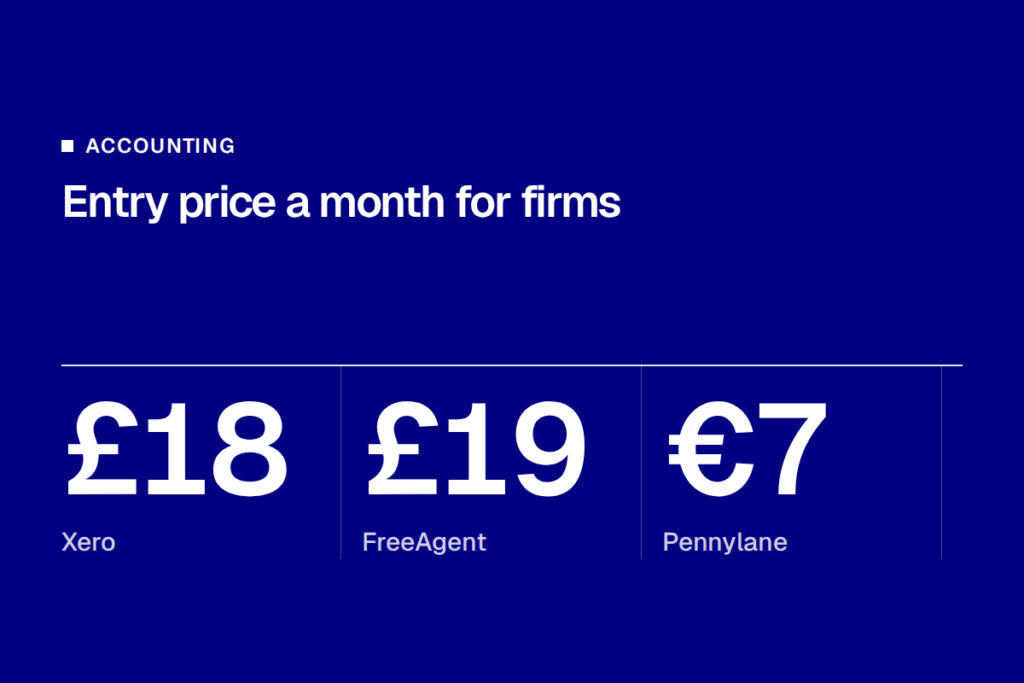
Cloud accounting software for accounting firms starts at £18 a month at Xero, £19 at FreeAgent and €7 at Pennylane, before the practice tools and compliance features that decide which platform a firm standardises on.
The choice carries more weight in 2026 than it did two years ago. Making Tax Digital for Income Tax has applied since April 6 to sole traders and landlords with income above £50,000, France’s e-invoicing mandate began on September 1, and US vendors are raising prices and adding AI.
This guide compares the platforms firms most often run with clients. It uses only prices and figures taken from vendor pages, regulators and company results dated 2026. Where a current list price could not be confirmed, it is left out.
Accountio.The go-to weekly newsletter, straight to your inbox.Weekly newsletter, straight to your inbox.
What cloud accounting software for accounting firms does
Cloud accounting software keeps a client’s ledger on the vendor’s servers, so the client and the firm work on the same live data through a browser. Bank feeds post transactions daily. Invoices, bills and VAT returns are produced in the same system.
For a firm, the difference from desktop software is access and control. Staff open any client file without transferring a backup, and the partner sees one list of clients rather than a folder of exports.
Every platform below also connects to third-party apps for payroll, expenses, payments and document capture. Intuit’s May 2026 survey of 725 US accountants and bookkeepers found the average firm runs about 10 apps, and that only 41% say their tools are fully integrated. Integration depth is therefore a buying criterion, not a footnote.
How Cloud Accounting Software Works
Hosting is the starting point. The vendor runs the application and stores every client’s data in its own data centres or on a cloud provider’s infrastructure. The firm does not own or maintain the servers. It pays a subscription and the vendor keeps the system running.
Access runs through a web browser. A user signs in with a password and, where enabled, a second verification step, and sees the same ledger as every other authorised user. Nothing is installed, and a client file opens on any device with a connection.
Bank feeds connect the ledger to a client’s bank account, so transactions arrive in the system without being typed or uploaded. The bookkeeper reviews and codes them instead of entering them.
Updates are applied by the vendor on its servers, so every user is on the same version at the same time. Desktop software is different. It is installed on a computer, the data sits in files on that machine or on a server the firm runs, and the firm installs updates and manages its own backups.
Cloud vs Desktop at a Glance
| Cloud | Desktop | |
|---|---|---|
| Cost model | Monthly subscription, from £18 at Xero, £19 at FreeAgent and €7 at Pennylane | Software licence plus the firm’s own hardware, upgrades and backups |
| Access | Any device with a browser and a connection, with firm and client on the same data | The computer or server where the software is installed |
| Security | The vendor secures the servers and the firm manages user access | The firm secures its own machines, servers and backups |
| MTD compatibility | Platforms built for Making Tax Digital submit to HMRC from the ledger | Compatible if the package submits to HMRC, otherwise it needs bridging software |
On Making Tax Digital, HMRC’s page on compatible software for VAT says businesses need either a compatible package or bridging software that links tools such as spreadsheets to HMRC systems.
Data Security in the Cloud
Xero holds ISO/IEC 27001:2022 certification for its information security management system and produces SOC 2 reports from independent audits of its cloud-based accounting system. Its security page also lists PCI DSS v4.0 SAQ A compliance and encryption of data in transit and at rest. Customers can download the certificate and report after signing in, or request them through a form.
FreeAgent keeps customer data in data centres in Ireland, spread across several availability zones. According to its security page, those data centres hold ISO 27001, 27017 and 27018 certification, and FreeAgent is Cyber Essentials Plus certified. Data is encrypted with TLS 1.2 in transit and 256-bit AES at rest, and an external CHECK and CREST certified supplier tests the application for weaknesses at least once a year.
Pennylane runs most of its platform on AWS in Ireland. Its approved e-invoicing platform is hosted by S3NS in France. Pennylane holds ISO 27001 certification with an annual audit by independent experts, and encrypts data in transit and at rest, as set out on its security page.
Certification covers the vendor’s systems, not the firm’s own habits. Access rights, passwords and second verification steps for staff remain the firm’s responsibility on any platform.
Practice tools and multi-client access compared
Xero runs a Partner Programme that its pricing page says serves 250,000 accountants and bookkeepers. It includes a Partner Hub, practice management tools, Xero Ledger and Xero Tax. Firms comparing it with dedicated systems can start with Accountio’s guide to practice management software for accounting firms.
FreeAgent gives accountants and bookkeepers a free practice dashboard with no upfront cost. Firms manage every client from one view and can pass on discounted client pricing through its partner programme, according to the vendor’s pricing page.
QuickBooks Online lists five UK plans: Sole Trader Plus and Simple Start for one user, Essentials for three, Plus for five and Advanced for 25. The user caps matter to firms that give a bookkeeper, a manager and a partner access to the same client file.
Pennylane has a separate offer for accounting firms in France, covering production accounting software and engagement charters. Chief executive Arthur Waller said the French reform “has mainly accelerated the migration of accounting firms” rather than smaller businesses so far.
Sage is the other incumbent most UK firms will already hold licences for. Its pricing page could not be retrieved for this article, so no Sage prices or limits are quoted here.
Xero, FreeAgent and Pennylane practice tools side by side
Xero has folded its older Xero HQ and Xero Practice Manager tools into Xero Partner Hub, a single practice homepage. Xero says the core features of both carry over with the same access. Partner Hub offers client widgets for an organisation watchlist, bank feed alerts and billable hour summaries, and Xero Workpapers requests, stores and manages working papers. On Xero’s partner products page, new partners can use Xero and Partner Hub for free, with more products added at the bronze, silver, gold and platinum status levels.
FreeAgent’s Practice Dashboard gives a firm one login to every client account. Clients who already use FreeAgent can be transferred to the practice or linked to it. With a transfer the practice takes full control of the account and pays the licence, according to FreeAgent’s help pages. With a link the client keeps ownership and pays for its own subscription. Firms can invite clients in bulk from a list of those not yet invited, submit payroll in bulk, and track each new client’s first 45 days in a Practice Insights report. For large moves, FreeAgent offers personalised support for bulk migrations through an account manager.
Pennylane builds firm management into its production tool. Its internal management page says firms can generate engagement letters from templates and have them signed electronically through JeSigneExpert, then create missions and billing plans from the same data. A separate CRM and portal module centralises prospects, converts them into clients and tracks their onboarding. Access to sensitive information can be limited by staff role. Billing covers recurring subscriptions and per-task invoices, collected by SEPA direct debit or through Pennylane’s business account, and invoices can be finalised in bulk.
The differences are practical. FreeAgent is the most explicit about moving existing clients in bulk. Pennylane is the most explicit about the commercial side of onboarding, from engagement letter to billing plan. Xero’s strength is the breadth of tools around the ledger, from working papers to time and billing.
QuickBooks Online Accountant and Sage for Accountants
QuickBooks Online Accountant is being retired. Intuit says it will be discontinued on December 31, 2026 and replaced by Intuit Accountant Suite, which it says includes all current QuickBooks Online Accountant features plus more. Firms that use the current product need to plan for the switch rather than treat it as a stable choice.
The Suite’s Core plan has no monthly fee for the firm. It gives one sign-in to every client’s QuickBooks data, lets firms group clients into segments such as industry, region or office, and sets permissions by office or service line. Firms with several QuickBooks Online accounts can consolidate them into one account with the client transfer tool, and tax clients can be managed in the same place without switching to ProConnect.
Two paid tiers, Accelerate and Books Close, are in a free beta through January 19, 2027. Billing starts on a firm’s next regular billing date from January 20, 2027, with 50% off for the first 12 months. Accelerate adds bulk role assignment through user groups. Intuit’s page does not list monthly prices for either tier, so none are quoted here.
Sage for Accountants is the vendor’s platform for managing many clients from one place. For Making Tax Digital, Sage says its MTD Agent is free for Sage Accountants and helps firms segment eligible clients and track submission requirements. A firm needs one Agent Services Account with HMRC, and staff can then be given logins under it. Sage’s pricing for client subscriptions is not quoted here.
Cloud accounting software for firms: what it costs
Xero’s UK plans are Ignite at £18 a month, Grow at £39, Comprehensive at £55 and Ultimate at £70, all excluding VAT. New customers receive 90% off for the first six months. Ignite caps users at 20 invoices and 10 bills; the higher plans are unlimited.
FreeAgent charges £19 a month for sole traders, £27 for partnerships and LLPs and £33 for limited companies. The first six months are half price, and the software is free for clients with NatWest, RBS, Ulster Bank or, for some plans, Mettle business accounts.
Pennylane prices in euros, excluding VAT: Starter at €7 a month, Basique at €14, Essentiel at €24 and Premium, which includes an accounting module, at €79. Each plan covers one user and up to 1,200 invoices a year. The company says e-invoicing is included in every plan at no extra cost.
QuickBooks raised prices in the US from August 1, and Intuit said on May 20 that QuickBooks Online Accounting revenue grew 22% in its third fiscal quarter, driven by higher effective prices, customer growth and mix shift. Current UK list prices were not displayed on Intuit’s UK page when it was checked, and secondary sources disagree, so none are quoted here. Firms should take a written quote before moving clients.
Cloud accounting software pricing table: Xero, FreeAgent and Pennylane
The table sets out each plan’s list price, user limit and tax filing coverage. All prices exclude VAT. Xero and FreeAgent prices are in pounds, Pennylane’s in euros. Introductory discounts are left out so the figures show the price after the offer ends.
| Platform and plan | Monthly price | User limit | VAT and MTD |
|---|---|---|---|
| Xero Ignite | £18 | No per-user licence fee | VAT returns to HMRC and MTD for Income Tax included |
| Xero Grow | £39 | No per-user licence fee | VAT returns to HMRC and MTD for Income Tax included |
| Xero Comprehensive | £55 | No per-user licence fee | VAT returns to HMRC and MTD for Income Tax included |
| Xero Ultimate | £70 | No per-user licence fee | VAT returns to HMRC and MTD for Income Tax included |
| FreeAgent Landlord | £10 | Not listed on the pricing page | VAT and MTD for Income Tax listed |
| FreeAgent Sole trader | £19 | Not listed on the pricing page | VAT and MTD for Income Tax listed |
| FreeAgent Partnership or LLP | £27 | Not listed on the pricing page | VAT, MTD compatible |
| FreeAgent Limited company | £33 | Not listed on the pricing page | VAT, MTD compatible |
| Pennylane Starter | €7 | 1 user, 1,200 invoices a year | E-invoicing included; tax filings by EDI on Premium |
| Pennylane Basique | €14 | 1 user, 1,200 invoices a year | E-invoicing included; tax filings by EDI on Premium |
| Pennylane Essentiel | €24 | 1 user, 1,200 invoices a year | E-invoicing included; tax filings by EDI on Premium |
| Pennylane Premium | €79 | 1 user, 1,200 invoices a year | E-invoicing included; tax filings by EDI included, with accounting module |
FreeAgent’s pricing page also shows annual billing at ten times the monthly rate, for example £330 a year for a limited company. Xero’s pricing page states that VAT returns and MTD for Income Tax are covered on every plan, while Pennylane’s tariffs page lists tax filings by EDI only on Premium.
Partner and wholesale pricing for firms
List prices are what a client pays on its own. A firm that brings many clients to one platform can pay less, and the vendors handle this differently.
Xero’s partner programme is free and has no ongoing costs. Every status level, from partner through bronze, silver, gold and platinum, includes a free Xero subscription to run the practice. Bronze and above are eligible for discounts on Xero business edition subscriptions, which do not apply to Xero Simple or Xero Ledger plans. Silver, gold and platinum add Xero Tax and Partner Hub with practice management.
FreeAgent’s accountant offer costs nothing to start. The Practice Dashboard is free and the firm pays only for the client licences it adds, with discounts that rise as the number of active licences grows. The choice between transferring and linking a client decides who pays: a transferred client is billed to the practice, a linked client keeps its own subscription.
Pennylane sells firms a separate production tool rather than discounting client plans, and says on its firm page that it locks the price of that tool. Its firm pricing is available through a demo request.
For a firm, the practical effect is on who carries the subscription. Under a bulk or transfer model the firm pays the vendor and re-bills clients, which adds cash flow exposure and an admin task but lets the firm set the margin. Under a link model the client pays the vendor and the firm earns status benefits. None of the three vendors publishes its partner discount rates for volume, so firms should ask for a written rate card before moving a client list.
Hidden costs that raise the real monthly bill
Payroll is the first extra on Xero. Ignite charges £1.50 per person a month. Grow includes one person, Comprehensive five and Ultimate ten, and each additional person costs £1.50, or £1 on Ultimate. Payment runs add £0.20 per payment on Ignite, while Grow, Comprehensive and Ultimate include 5, 10 and 15 payments before the same charge applies. FreeAgent lists payroll as included on its limited company, partnership and sole trader plans, with no separate cost.
Multi-currency decides the Xero tier for clients that trade abroad. It is excluded from Ignite and Grow and included from Comprehensive at £55, so a client that invoices in foreign currencies pays at least £16 more a month than on Grow.
Extra users are not charged as licences at Xero, but features tied to users are. Expenses and mileage are excluded from Ignite, cover one user on Grow, five on Comprehensive and ten on Ultimate, then cost £2.50 per additional user. Projects, available only on Ultimate, cover ten users and then cost £5 per additional user. Pennylane’s plans each cover one user.
Add-ons complete the bill. On Xero, auto-reconcile costs £3.50 a month on Ignite and is included on the higher plans, contractor CIS returns cost £5 a month, and company accounts and tax cost £120 a year. FreeAgent charges £5 a month for Smart Capture Unlimited and £6 a month for its Amazon add-on. On Pennylane, the accounting module and tax filings by EDI require Premium at €79, more than three times the €24 Essentiel price.
A Xero Ignite client with two employees and auto-reconcile therefore pays about £18 plus £3 payroll plus £3.50, or £24.50 a month, before VAT. Adding the £120 company accounts and tax add-on lifts it by £10 a month on an annual basis.
Cloud accounts production for UK firms
The ledger and the year-end accounts are separate jobs. The bookkeeping ledger records transactions through the year and produces a trial balance, a list of every account with its debit or credit balance. Accounts production starts from that trial balance. It places each balance in a statutory line, applies the year-end adjustments the firm makes, and outputs accounts for the reporting framework the company uses.
That is why firms rarely rely on the ledger alone for limited company work. Xero, FreeAgent and Pennylane handle the daily records. Statutory accounts are built in a tool designed for them. Firms in the UK commonly use IRIS Elements, TaxCalc, Silverfin, CCH iFirm, Sage Accounts Production or the Xero accounts production add-on, each compared below. Pennylane combines the two jobs for firms in France, with a production tool that works from client data already collected and checked in the same platform, according to its firm page.
Cloud accounts production for firms: six tools compared
Accounts production software takes a client’s trial balance, builds statutory accounts for limited companies, tags them in iXBRL and files them. It sits beside the ledger rather than inside it. For UK company work, the comparison comes down to filing format, the reporting frameworks covered and the price per user or per client.
IRIS Elements Accounts Production has three plans. Essentials costs £125.18 per user a year and Professional £174.66, both on 12-month contracts with a minimum subscription covering 10 clients. Enterprise is priced on request. Essentials and Professional cover FRS 105 and FRS 102 Section 1A. Enterprise adds full FRS 102, FRS 101, charities and group accounts. Professional and Enterprise include flexible iXBRL tagging, and accounts are submitted electronically to Companies House.
TaxCalc Accounts Production starts from £164 a year and is sold as an annual licence in client bands of 50, 150, 250, 500 and 1,000, each including two concurrent users. It covers FRS 102 Section 1A and FRS 105. Medium and large company accounts under FRS 102 need a separate add-on. TaxCalc tags limited company and charity accounts in iXBRL automatically and files them with Companies House, and amended or revised accounts can be filed the same way.
Silverfin’s marketplace templates for micro-entity accounts under FRS 105 and for FRS 102 include iXBRL tagging with no manual tagging and a direct link to file with Companies House. Silverfin lists FRS 102, FRS 102 Section 1A, FRS 105 and LLP accounts. Its prices are not quoted here.
Wolters Kluwer launched CCH iFirm Accounts Production in April 2025 as the cloud successor to its on-premises CCH Accounts Production. It covers sole traders, partnerships and limited companies under FRS 105 and FRS 102, and firms can migrate up to five years of data at once from the on-premises product. Its prices are not quoted here.
Xero’s accounts production for UK limited companies covers dormant companies, FRS 105 micro-entities and FRS 102 Section 1A small companies. Xero Tax is included in Xero Partner Hub at no extra cost to accountants. Clients on Ignite, Grow, Comprehensive and Ultimate plans can add company accounts and tax for £120 a year, excluding VAT. Accounts and returns can be filed to Companies House and HMRC from inside Xero. Xero’s page does not list full FRS 102.
Sage’s Accounts Production packs cover UK small companies under FRS 102 Section 1A and micro-entities under FRS 105, tagged to the FRC taxonomy. Sage’s release notes record the FRC 2024 taxonomy update on September 26, 2024 and electronic filing of revised financial statements to Companies House since November 1, 2022. Sage prices are not quoted here.
On published prices, TaxCalc is the lowest entry point and IRIS the only one of the six whose cited plans list full FRS 102 beyond Section 1A without a separate add-on. Firms with mostly micro-entity and small company clients can choose on workflow and integration rather than framework coverage.
Ledger to accounts production integrations
The time saved by an accounts production tool depends on how it gets the trial balance. IRIS’s help pages list a live connection to IRIS KashFlow, QuickBooks, Xero, FreeAgent and Sage Accounting. The user signs in with the client’s credentials, approves access, chooses a period and fetches the trial balance. On the Essentials plan, import is limited to CSV files.
TaxCalc imports year-end trial balances from QuickBooks Online, Xero and FreeAgent through third-party APIs and its import wizard, and can send journals or adjustments back to the ledger. Silverfin’s templates list direct integration with Xero, QuickBooks and Sage 50. Xero Tax has no import step because it builds accounts from the client’s Xero books and keeps the data in sync until the filing is locked. Of the six tools, only IRIS and TaxCalc name FreeAgent in the pages cited.
Sage added suggested mappings to its Xero trial balance import on May 13, 2024, for FRS 102 Section 1A, FRS 105, sole trader and partnership accounts. Its release notes list CSV import, including column mapping and retained mappings, as the route for other ledgers, and QuickBooks does not appear in them.
Mapping is where imports break. Each ledger uses its own account codes, and the accounts tool has to place every one in a statutory line. IRIS’s Xero App Store listing says Xero account codes are mapped automatically, differences are flagged before import, including unrecognised codes, and map changes carry over to later years. Xero says its own accounts production uses revised UK report codes and a dedicated rounding account, with negative values handled separately.
Period length is a second failure point. TaxCalc says third-party API imports work only for 12-month periods, so first-year accounts and accounts for short or long periods must go through CSV import. Firms should test one client with a non-standard chart of accounts and one with a long first period before committing to a tool.
Connecting the ledger to accounts production
For Xero and FreeAgent clients, the trial balance reaches the accounts production tool in one of three ways. Inside Xero, the company accounts and tax add-on prepares micro-entity accounts from the client’s Xero data, so nothing moves between systems. In IRIS Elements, the preparer opens the client’s Trial balance tab, connects the bookkeeping application with the client’s credentials and approves access. Then the preparer fetches the figures for the period, checks the account mappings and saves. Updated figures can be fetched again later, or the connection can be removed, according to IRIS’s help pages.
TaxCalc lists a direct import of a year-end trial balance from Xero, QuickBooks and FreeAgent. The third route is a CSV file exported from the ledger, which every tool above accepts in some form and which the Essentials plan at IRIS is limited to. Firms use it for periods the API routes do not handle, and for ledgers with no live connection.
Pennylane works differently. Its production tool sits in the same platform as the ledger, so a firm in France moves from collected client data to tax filings without exporting a trial balance. The IRIS help page on importing from bookkeeping applications does not list Pennylane, so a firm that wants to run Pennylane data through an outside accounts production tool should confirm the route with that vendor first.
Companies House filing changes and the accounts production choice
Companies House announced on June 9, 2026 that, from April 2028, all UK registered companies must file accounts in iXBRL using commercial software. The reforms were first due in April 2027. The rule covers companies that file their own accounts and those that use an accountant, and the web and paper routes for accounts will close.
GOV.UK guidance on using software to file company information says there is no transition period and that revised accounts are included. It warns that not all software supports the iXBRL tagging required, and it points to a published list of software for filing company accounts. Web filing stays available for other filings such as confirmation statements and director updates.
The same package ends abridged accounts and requires small companies and micro-entities to file a profit and loss account, with an option not to publish it. Companies claiming audit exemption must give a strengthened eligibility statement. Companies House said companies will have 21 months to prepare, and that details of the opt-out from publishing profit and loss information will be confirmed later.
For firms, three tests follow. The tool must produce iXBRL for every client type the firm serves, including the full profit and loss account that small and micro clients will now file. It must handle amended and revised accounts, since the closing of the web route covers those too. And it must suit clients who file themselves, because they will also need software. Firms that tag and file through IRIS, TaxCalc, Silverfin, Sage or Xero already meet the format requirement for the frameworks each covers, and the choice rests on the integration and framework points above.
Filing accounts from the cloud
iXBRL is a format that combines readable HTML with machine-readable tags, and the accounts production tool applies the tags as it builds the accounts. Companies House says that from April 1, 2028 all companies must file accounts with commercial software, with no transition period. The web and paper routes close for accounts, and the GOV.UK guidance on filing software tells companies to check that their provider supports iXBRL tagging and to have the software in place before that date.
The government has since paused the requirement for small companies and micro-entities to file a profit and loss account, according to the updated Companies House announcement. The software filing rule itself is unchanged.
Vendors split the filing job differently. TaxCalc says limited company and charity accounts are tagged automatically in iXBRL, ready for electronic submission to Companies House or HMRC. IRIS includes flexible iXBRL tagging on its Professional and Enterprise plans and submits accounts to Companies House. Silverfin’s templates tag accounts without manual work and link directly to Companies House. Xero’s company accounts and tax add-on, built for small owner-managed limited companies, prepares FRS 105 accounts and files them with Companies House from inside Xero, and prepares the CT600 company tax return and submits it to HMRC. Xero’s page for the add-on does not mention iXBRL.
The check for a firm is whether one tool covers each submission its clients need: accounts to Companies House, and the company tax return to HMRC. Ask the vendor to name the frameworks, company types and filing routes covered, and test a filing for each before the 2028 deadline.
Making Tax Digital compatibility for UK firms
HMRC’s guidance says taxpayers within scope must use software that works with Making Tax Digital for Income Tax, and recommends checking with the provider that it meets their needs. The threshold is £50,000 of combined self-employment and property turnover, measured before expenses.
Agents can sign clients up themselves or send them an authorisation request link, HMRC said. The income threshold falls to £30,000 in April 2027 and £20,000 in April 2028, which will bring many smaller clients into scope.
Xero, QuickBooks and FreeAgent are all established in the UK software market, so for most firms the question is how many clients each platform can submit quarterly updates for from one login. Accountio’s guides to Making Tax Digital and income tax sign-up for accountants cover the practical steps. Its best cloud accounting software list covers the wider field.
US adoption and EU e-invoicing readiness
In the US, Intuit’s QuickBooks dominates firm workloads, and Xero is growing from a small base. Xero added 110,000 US customers in the year to March 2026, helped by its Melio acquisition, and ended the year with 4.92 million customers worldwide, Xero said on May 14.
Intuit’s survey, conducted in May 2026, found 92% of US firms invested in technology over the past year, spending about $21,000 on average. Eighty-eight per cent used AI for at least one client service. The survey does not report a cloud adoption rate.
In Europe, the pressure is regulatory. The European Commission said the VAT in the Digital Age package was adopted on March 11, 2025 and lets member states introduce mandatory e-invoicing. Digital reporting for cross-border B2B transactions starts on July 1, 2030, and domestic systems must align with the EU model by January 1, 2035.
France moved first. Its mandate took effect on September 1, 2026. Pennylane says it operates as an approved platform, and raised €175 million at a €3.5 billion valuation in January, led by TCV with Blackstone Growth. It reports 800,000 business customers, more than 6,000 partner accounting firms and €115 million of annual recurring revenue for 2025, against €60 million in 2024.
Choosing a platform to standardise on
Making Tax Digital readiness comes first. HMRC’s guidance sets the income threshold at £30,000 from April 6, 2027 and £20,000 from April 6, 2028, and says partnerships will need to use the service later, with a timeline still to come. Ask each vendor how many clients a firm can handle from one login, whether quarterly updates can be submitted in bulk, and how the platform treats a client with several income sources. Sage’s own pages on this point are not consistent between products, so test the product the client will actually use.
Multi-entity clients come second. Check whether one login reaches every entity a client owns, whether permissions can be set by office or service line, and whether the platform can consolidate accounts. Intuit Accountant Suite lets firms consolidate several QuickBooks Online accounts into one. FreeAgent lets a firm choose between transferring a client account and linking to it, which decides who owns the account and who pays the licence.
Staff training comes third. Ask what the vendor provides inside the product and what the firm must build itself. Xero Partner Hub includes an in-product tour and video guides for staff coming from Xero HQ and Xero Practice Manager. FreeAgent’s Practice Insights report shows which key actions new clients have completed in their first 45 days. Count the cost of a migration, including the switch from QuickBooks Online Accountant to Intuit Accountant Suite before December 31, 2026, in staff hours as well as licence fees.
How firms should choose in 2026
A firm with mostly UK sole traders and small companies will weigh Xero, FreeAgent and QuickBooks on the Making Tax Digital workflow and the cost of passing licences to clients. A firm with clients in France should test Pennylane’s e-invoicing against its own ledger before the next quarter closes.
The next dates to plan against are April 2027, when the Making Tax Digital threshold falls to £30,000, and the second phase of France’s mandate in September 2027, when smaller companies must begin issuing e-invoices.
Accountio.
The go-to weekly newsletter for accounting professionals. Trusted by 10,000+ industry leaders to deliver the tech trends and insights that matter most. Join them today.
Companies in this article
XeroBookkeepingView listing →FreeAgentBookkeepingView listing →PennylaneERP and General LedgerView listing →SilverfinPractice ManagementView listing →TaxCalc Accounts ProductionTax and ComplianceView listing →KashFlowBookkeepingView listing →MelioAP AR and PaymentsView listing →