Professional clearance letter template for accountants
Write to a new client's previous accountant before you accept the work, with the client's signed permission on the second page. This professional clearance letter template is one Word letter, ready for your letterhead.
UK practices- In the pack
- Client onboarding and disengagement pack
- Files
- 8, Word
Get the pack by email
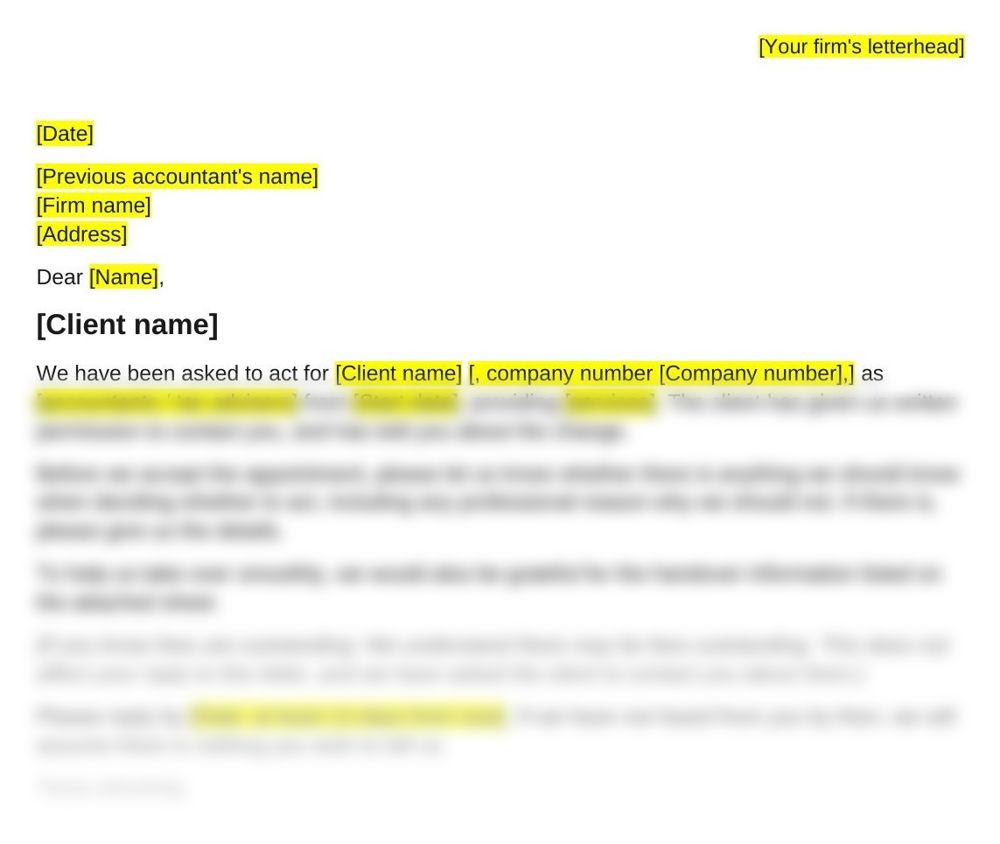
What the letter looks like
When to send it
Send it before you accept any client who already has an accountant. ICAEW's Code of Ethics sets out the process in section 320, and ICAEW calls it a professional enquiry rather than clearance.
- A new client is moving to you from another accountant or bookkeeper
- You are asked to take on extra work, such as tax returns, while another firm keeps the accounts
- A company client changes accountant after a sale or a change of directors
- The previous accountant has retired, closed the firm or died, and you need to reach their alternate or the estate
How to use the professional clearance letter template
- Get the permission page signed first. The client signs page two before you send anything, and a director signs for a company.
- Fill in the client's details. Name, company number if there is one, your start date and the services you will provide.
- Attach the handover request. The pack's handover sheet lists the returns, balances and records you need from the previous accountant.
- Set a reply date. Give at least 14 days and write it as a date.
- Chase if there is no reply. Phone or email first, then write again by recorded delivery stating that you intend to accept the work.
Questions
What is professional clearance?
It is the letter a new accountant sends to the previous accountant before taking on a client, asking whether there is any reason not to act. ICAEW calls it a professional enquiry, because the previous accountant can't give or refuse permission to act. The decision to accept is yours.
How do I reply to a professional clearance letter?
Get your client's permission first, then reply promptly with the facts. The pack includes a reply letter for the outgoing accountant, with versions for no issues and for issues to report, and optional lines for unpaid fees and the handover.
What if the previous accountant doesn't reply?
Chase by phone or email. If you still hear nothing, ICAEW's code says you must write by recorded delivery, or with a read receipt, stating that you intend to accept unless they reply within a reasonable period. ICAEW says less than two weeks is unlikely to be reasonable.
Can the previous accountant refuse to reply because of unpaid fees?
No. Unpaid fees are not a reason to ignore a professional enquiry. The previous accountant must reply once the client has given consent, and can mention the fees in the reply.
Can I ask whether they reported the client for money laundering?
No. ICAEW's code says you must not ask whether the previous accountant has reported suspicions of money laundering, and they can't answer it. They must still tell you anything you ought to know.
What if the client won't give permission?
Ask why and write down the answer. Then decide whether you can accept the work. ICAEW notes that a client who refuses to cooperate makes a constructive relationship hard to see.
Also in the client onboarding and disengagement pack
Who it's for
Sole practitioners and small firms who take on clients from other accountants and want every enquiry made in writing the same way.
Last checked
Checked against ICAEW guidance on changes in professional appointment in October 2026.