Fee increase letter template for accountants
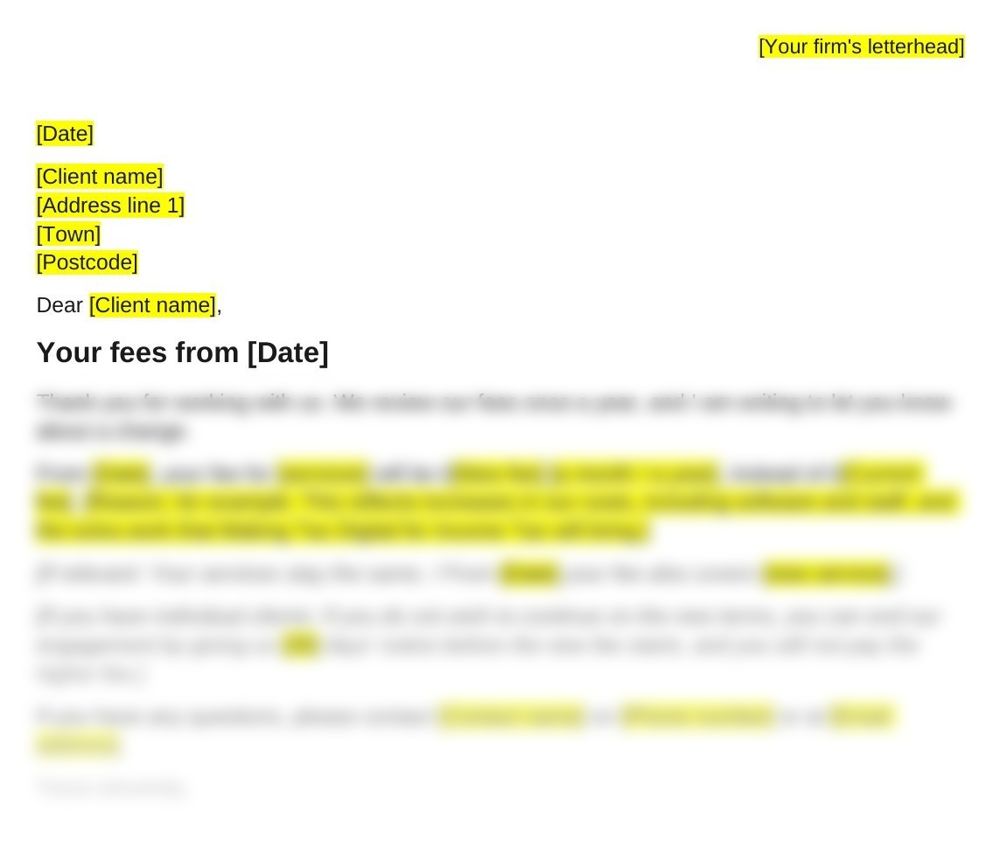
Tell clients in writing what their new fee is, when it starts and why. This fee increase letter template is one short Word letter, ready for your letterhead, with optional lines for new services and for individual clients.
UK practices- In the pack
- Client onboarding and disengagement pack
- Files
- 8, Word
Get the pack by email
What the letter looks like
When to send it
Send it whenever a client's fee changes, with enough notice for the client to decide before the new fee starts. AAT's Client Care policy says that when terms change, members must issue a new engagement letter and amend the terms with the client.
- Your yearly fee review puts a client's fee up
- A client's work grows, for example more transactions, more employees or a VAT registration
- A client starts using Making Tax Digital for Income Tax and the work grows with it
- You add a service to the client's package and the fee changes with it
How to use the fee increase letter template
- Set the start date. Use the same date in the heading and in the fee line, and leave time for the client's notice period before it.
- Fill in both fees. Show the current fee and the new fee for the same services, monthly or yearly.
- Give a short reason. One sentence is enough. Delete the line if you prefer not to give one.
- Choose the services line. Keep the version that says services stay the same, or the one naming a new service.
- Keep the notice line for individuals. Set the number of days and keep a copy of the letter on the client file.
Questions
How much notice should I give before a fee increase?
Give at least the notice your terms of business set out, and enough time for the client to end the engagement before the new fee starts if they want to. The letter has a line for a notice period, with 30 days as the default.
Do I need a new engagement letter when fees go up?
For AAT licensed members, yes: AAT's Client Care policy says that when any terms change, the member must issue a new engagement letter and amend the terms with the client. For others, the fee letter records the change and the date it applies from.
Can I increase fees for individual clients?
Yes, with care. The Consumer Rights Act 2015 lists a term that lets a trader raise prices without giving the consumer a right to cancel as one that may be unfair. The optional line in the letter gives individual clients that right before the new fee starts.
Should a fee increase letter give a reason?
A short reason helps the client understand the change, for example higher costs or more work. Keep it to one sentence and to the facts.
How do I tell clients about a fee increase?
Write to each client by letter or email with the new fee, the date it starts and who to contact with questions. Send it well before the date and keep a copy on file.
Also in the client onboarding and disengagement pack
Who it's for
Sole practitioners and small firms who review fees once a year and want every client told in the same clear way.
Last checked
Checked against AAT's Client Care policy, the Consumer Rights Act 2015 and HMRC guidance on Making Tax Digital for Income Tax in October 2026.