Disengagement letter template for accountants
Confirm in writing when you stop acting for a client, what you have finished, what you will still do and what they need someone else to handle. This disengagement letter template is one Word letter, ready for your letterhead.
UK practices- In the pack
- Client onboarding and disengagement pack
- Files
- 8, Word
Get the pack by email
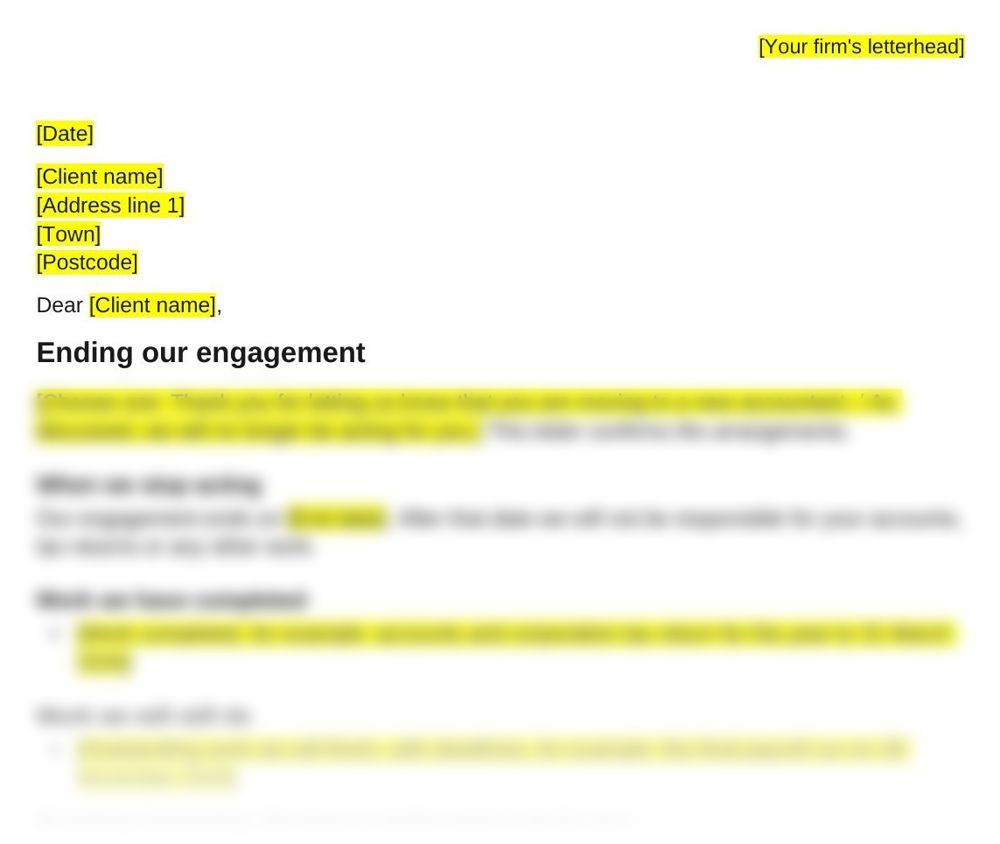
What the letter looks like
When to send it
Send a disengagement letter every time a client relationship ends, whoever ends it. AAT requires one from its licensed members and ICAEW calls it best practice.
- A client tells you they are moving to a new accountant
- You decide to stop acting, for example over unpaid fees or a change in the services you offer
- A company client is closed, sold or struck off
- You stop one service but keep others, such as dropping payroll while still doing the accounts
How to use the disengagement letter template
- Pick the opening line. One version thanks a client who is leaving, the other confirms that you are ending the engagement.
- Set the end date. Use the same date for the end of the work, the fees and the HMRC authorisations.
- List the work in three groups. Done, still to do by you, and to be done by someone else, each with its deadline written as a date.
- Choose the fees line. Delete the two versions that don't apply.
- Send it with a delivery record. Email with the letter attached, or post it signed for, and keep a copy on the client file.
Questions
Do accountants have to send a disengagement letter?
For AAT licensed members, yes: AAT's Client Care policy says members must confirm the end of every engagement with a disengagement letter, unless there is good reason not to. ICAEW calls a written letter best practice. Either way, it is your record of what you agreed to finish and what you handed back.
What should a disengagement letter include?
The date you stop acting, the work you have finished, any work you will still do, the deadlines the client must now meet with someone else, fees still due, and what happens to their documents and your HMRC authorisations.
Does the client need to sign the letter?
No. The letter takes effect from the end date it gives, whether or not the client signs or replies. Keep proof that you sent it.
Should the letter say why the client is leaving?
Keep it to the facts of the handover. If you have concerns about money laundering, don't mention them in the letter: telling the client could count as tipping off. Speak to your MLRO instead.
How long do I keep the client's records after they leave?
Keep customer due diligence records for five years after the relationship ends, as the Money Laundering Regulations require. Other records follow your firm's retention policy and privacy notice.
Also in the client onboarding and disengagement pack
Who it's for
Sole practitioners and small firms who want every client exit confirmed in the same clear way.
Last checked
Checked against ICAEW and AAT guidance on ending a client relationship in October 2026.