Internal suspicious activity report template for accountancy firms
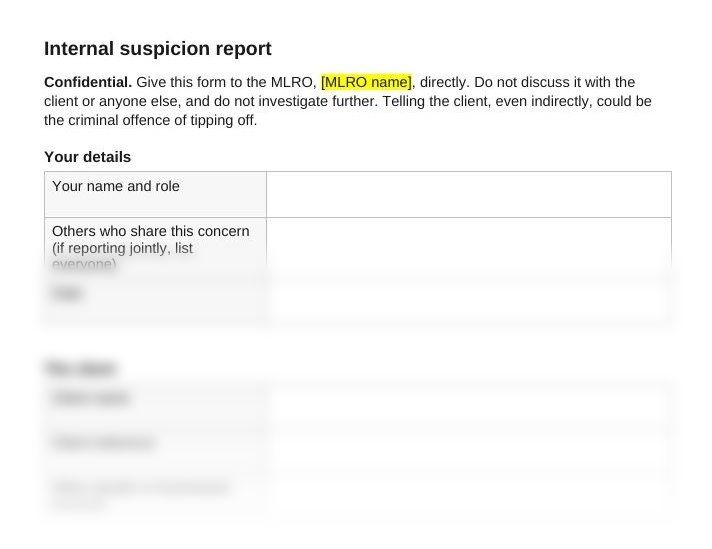
Give staff one clear way to report a money laundering concern to the MLRO, with the facts the MLRO needs to decide what to do. This internal suspicious activity report template is one confidential Word form, linked to the MLRO log in the pack.
UK practicesGet this pack and 100 more for $129
What the form looks like
When staff need it
Under the Proceeds of Crime Act 2002, anyone in a firm in the regulated sector who knows or suspects money laundering, or has reasonable grounds to, must report it to the firm's nominated officer, the MLRO, as soon as practicable. Telling a line manager or colleague is not enough. The MLRO then considers the report and decides whether to report to the National Crime Agency.
- A client's money or transactions don't fit what you know about their business
- A client won't explain where funds come from, or the explanation doesn't add up
- You find signs of tax evasion or other crime that has produced money or property
- A client asks for work that seems designed to hide who owns or controls something
How to use the internal suspicious activity report template
- Add your MLRO's name. Put it in the instruction at the top before you save the form for staff.
- Write down the facts. What you saw, when and how you found out, and any amounts, dates and accounts. Facts, not just your conclusion.
- Name everyone who shares the concern. One report can cover several people, as long as each of them knows about it.
- Hand it to the MLRO directly. Don't discuss it with the client or anyone else, and don't investigate further.
- The MLRO logs it. They give it a reference from the MLRO log, acknowledge it and record the decision and reasons in the log.
Questions
What is an internal suspicious activity report?
A report from a member of staff to the firm's MLRO about a suspicion of money laundering or terrorist financing. It is how staff meet their own legal duty to report. The MLRO then decides whether to make a suspicious activity report to the National Crime Agency.
Is there a set format for an internal SAR?
No. The accountancy sector's guidance says there is no prescribed format for internal reports to an MLRO. A standard form helps staff give the facts the MLRO needs: who, what, when, amounts and where the evidence is kept.
Can two people make one internal report?
Yes. When several staff know of the same matter, one report can go to the MLRO, but it should name everyone making it. Nobody should be named on a report they don't know about.
Can I tell the client I have made a report?
No. Telling the client, or anyone else, that a report has been made, in a way likely to prejudice an investigation, can be the offence of tipping off. The maximum penalty is two years in prison, a fine or both.
What does the MLRO do with the report?
The MLRO must consider it in the light of any relevant information and decide whether it gives rise to knowledge or suspicion of money laundering. If it does, the MLRO reports to the National Crime Agency and decides whether a defence against money laundering is needed before work continues.
Also in the AML compliance pack
Who it's for
Sole practitioners and small accountancy firms that want staff to report concerns the same way every time.
Last checked
Checked against the Money Laundering Regulations as amended on 30 June 2026 and the sector's July 2026 guidance.