Customer due diligence form for UK accountancy firms
Record who the client is, how you checked it and why they need you, before any work starts. This customer due diligence form is one Word form for individuals and sole traders, with a second form in the pack for companies and LLPs.
UK practicesGet this pack and 100 more for $129
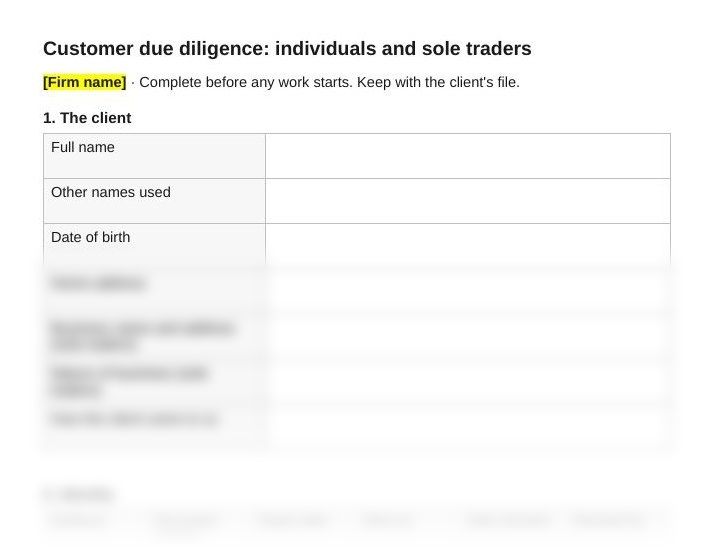
What the form looks like
When you need it
The Money Laundering Regulations 2017 require you to identify and verify each client, and understand the purpose and intended nature of the relationship, before you take them on. Complete one form for every new client and again at each review. For a company or LLP, use the companies form in the pack, which adds the Companies House register check, the directors and the beneficial owners.
- You take on a new individual or sole trader client
- A client's review date in your client risk register comes round
- Something changes, such as a new business, a large unexpected transaction or a new address
- A client you already act for asks for a new service, such as payroll or VAT returns
How to use the customer due diligence form
- Pick the right form. Individuals and sole traders use this form. Companies and LLPs use the companies form, which partnerships and trusts can adapt.
- Fill in the client's details. Full name, date of birth, home address and, for sole traders, the business.
- Record the ID you saw. Note the document, its expiry date and whether you saw the original, a certified copy or an electronic check.
- Run the checks. PEP, UK sanctions list, FATF "call for action" countries and adverse news, with the date of each.
- Rate and sign off. Take the rating from the client risk register, get senior approval for PEPs and high-risk clients, and set the next review date.
Questions
What is customer due diligence?
The checks the Money Laundering Regulations require before you act for a client: identifying the client, verifying who they are from reliable, independent evidence, identifying any beneficial owners, and understanding the purpose and intended nature of the relationship. You then keep monitoring the relationship and keep the information current.
What should a customer due diligence form include?
The client's identity details, the evidence you checked and when, the purpose of the relationship, PEP and sanctions checks, the client's risk rating with a reason, any enhanced checks, who approved the client and when the next review is due.
When must customer due diligence be done?
Before you start the business relationship. The regulations allow verification to finish during set-up only where it is needed so as not to interrupt normal business, there is little risk, and you complete it as soon as practicable.
What ID is acceptable for customer due diligence?
Verification must use documents or information from a reliable body that is independent of the client. Documents issued by an official body count even if the client hands them over. The accountancy sector guidance treats a valid passport or photocard driving licence as best practice. An electronic check counts if it is secure from fraud and misuse and gives enough assurance of identity.
How long do I keep customer due diligence records?
Five years from the date you know, or have reasonable grounds to believe, that the business relationship has ended.
What extra checks apply to a politically exposed person?
Enhanced due diligence. You need senior management approval to take on or keep the client, adequate measures to find out where their wealth and the funds involved come from, and enhanced ongoing monitoring. The form has a line for the approval.
Also in the AML compliance pack
Who it's for
Sole practitioners and small accountancy firms that want every client check recorded the same way.
Last checked
Checked against the Money Laundering Regulations as amended on 30 June 2026 and the sector's July 2026 guidance.