HMRC Details Finance Act 2026 Ban on Promoting Tax Avoidance
HMRC’s October 30 guidance sets out who counts as a promoter, the £1m civil penalty and the two-year prison term under the new ban.
HMRC published guidance on October 30 on the Finance Act 2026 ban on promoting tax avoidance, a rule that applies to any scheme selling a tax refund or relief with no realistic prospect of success.
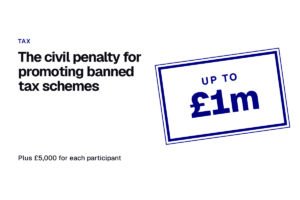
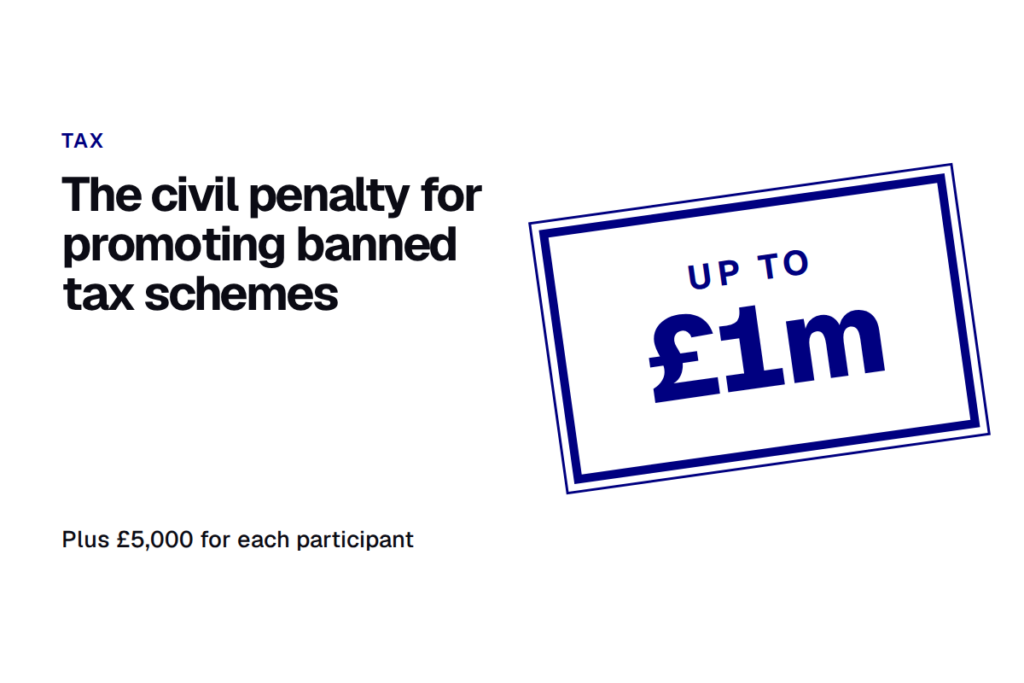
The policy paper covers sections 159 to 165 of the Act, which create a civil and criminal prohibition on promotion, known as POP. Civil penalties run to £1 million plus £5,000 for each participant. Conviction on indictment carries up to two years in prison.
For accountancy practices, the question is where an adviser stops being a bystander and becomes a promoter. The guidance draws that line in some detail, and it matters to any firm that introduces clients to, or files returns for, a scheme sold by someone else.
Accountio.The go-to weekly newsletter, straight to your inbox.Weekly newsletter, straight to your inbox.
What the HMRC tax refund promotion ban covers
Section 159 sets out two categories of prohibited arrangements. The first is any arrangement that has been, or is likely to be, marketed as giving a particular tax advantage when there is no realistic prospect that it will deliver it.
The second is any arrangement of a kind specified in regulations. HMRC may specify arrangements that it reasonably considers are marketed as a route to a tax advantage, are unlikely to work and are likely to harm participants.
The statutory definition of tax advantage in section 165 includes relief, repayment of tax, avoidance of a charge or assessment, and deferral of payment. An HMRC tax refund claim built on a failed scheme therefore falls inside the rule. The definition matches the one used in the promoters of tax avoidance schemes (POTAS) legislation.
HMRC lists indicators of a scheme with no realistic prospect of success:
- Facts the same as, or substantially similar to, a court ruling that already stops the scheme working.
- Reliance on users failing to meet an obligation where that makes no economic sense, such as a loan not genuinely expected to be repaid.
- Reliance on factual assertions or legal opinions that HMRC considers wholly without merit or contradicted by documents.
- Reliance on an Extra Statutory Concession to obtain a relief that could not otherwise be had.
Under section 159(5), it does not matter whether a promoter knows or has reason to believe the arrangements are prohibited. Ignorance of the law is not a defence, and HMRC’s worked example says it is not a mitigating factor for penalties either.
The regulation-making power has its own harm indicators. They include a large number of participants, participants without independent advice, participants with straightforward tax affairs, mass marketing, standardised documents and promoters that participants cannot identify or contact. No single factor is decisive.
HMRC tax refund schemes and who counts as a promoter
Section 160 defines promotion. A person promotes arrangements if, in the course of business or for monetary gain, they communicate information to encourage others to implement them, make them available, organise or manage any aspect of them once implemented, or arrange for someone else to do any of those things.
Monetary gain is read widely. HMRC says it extends to gifts, access to assets and other benefits, not only cash.
The guidance gives two examples of promoters: a financial adviser who sends marketing material to clients and encourages them to take part, and a person who designs the arrangements and prepares the contracts and paperwork. Introducers fall in the first group if they encourage participation in the course of business or for gain.
The guidance also sets out who is not caught. An agent or adviser who files an HMRC tax refund claim or return based on prohibited arrangements is not a promoter if filing is their only action and they have no connection to the promoter or other participants.
A provider of goods or services used in a prohibited scheme is not a promoter if its terms are commercial and it neither knew nor could reasonably have known of the prohibited use. HMRC’s example is a bank holding a promoter’s client account into which scheme funds are paid. Providing only legally privileged advice may also not make someone a promoter.
Those carve-outs are narrow. A firm that recommends a scheme to clients, helps design its paperwork or receives a fee for introductions sits on the other side of the line.
Penalties and enforcement powers
Civil penalties under section 162 reach £1 million plus £5,000 for each participant who took part while the arrangements were prohibited. HMRC says it will weigh the number of participants, actual or targeted, the tax at risk, the person’s cooperation, and whether the conduct was repeated or prolonged.
Penalties carry interest if unpaid 30 days after the notice, and further penalties may follow if more participants are later identified. A company’s penalty may be transferred to certain individuals under joint and several liability rules.
Sections 163 and 164 create the criminal offence. A summary conviction brings an unlimited fine in England and Wales, or up to the statutory maximum in Scotland and Northern Ireland. Conviction on indictment brings an unlimited fine, up to two years in prison, or both.
Directors, managers, secretaries, partners and LLP members with management functions can be personally liable where an offence was committed with their consent or connivance, or is attributable to their neglect. A shadow member is someone whose instructions the members customarily follow. HMRC says giving professional advice alone does not make someone a shadow member.
An authorised officer decides whether to impose a civil penalty under section 165. HMRC must first notify the person and allow 30 days for representations. Penalty notices can be appealed under section 100B of the Taxes Management Act 1970 within 30 days, to an HMRC internal review or an independent tribunal, and HMRC will not seek payment while an appeal is pending.
Prosecution decisions sit with the independent authorities: the Crown Prosecution Service, the Crown Office and Procurator Fiscal Service and the Public Prosecution Service for Northern Ireland. HMRC says it will reserve criminal investigation for cases that need a strong deterrent message or where only a criminal sanction is appropriate. No civil penalty can be charged once a person has been convicted for the same conduct.
A breach may also affect eligibility under the Mandatory Tax Adviser Requirements. Practices that already hold HMRC adviser registration should read that consequence alongside their own standing with the department.
When the Finance Act 2026 ban took effect
Under section 165(2), section 159(1) comes into force two months after the day the Act was passed. Legislation.gov.uk records the prohibition as in force from May 18, 2026. HMRC’s policy paper gives the date as May 19.
The prohibition therefore applies to promotion now, not from some future date. Regulations specifying further arrangements will take effect soon after the statutory instrument is laid before the Commons, which must approve it within 28 days or the regulations cease to have effect. HMRC says breaches during that window remain breaches.
The ban sits alongside the existing promoter regimes. HMRC’s penalty provisions elsewhere and the penalty rules HMRC has set out for digital platform operators show the department building a layered set of sanctions, each with its own triggers and appeal routes.
What tax bodies say about practical exposure
The measure was not in the draft Finance Bill, so it was not formally consulted on. The Chartered Institute of Taxation said so in written evidence to the Public Bill Committee and also warned that the Part 6 and Part 7 adviser measures should be viewed together.
The Association of Taxation Technicians has argued the prohibition is drafted too broadly. In its briefing on the bill, it said the trigger “is an evaluative judgement as to whether arrangements have ‘no realistic prospect’ of achieving a tax advantage, a determination that may often only be made with hindsight in areas of legal uncertainty”.
The ATT also noted that the criminal offence is one of strict liability, with no need to show intent, recklessness or dishonesty, and no statutory defence for reasonable professional judgment. It proposed a requirement for deliberate or reckless conduct, or a reasonable care defence. The guidance published on October 30 does not add either.
The Economic Secretary to the Treasury, Lucy Rigby, told the Commons on February 3 that the rules were aimed at persistent promoters.
“these clauses are about targeting those who continue to promote tax avoidance” Lucy Rigby, Economic Secretary to the Treasury, HM Treasury
On the regulation-making power she said: “The power is not at all intended so that HMRC can ban advisers from recommending tax positions they think are right.”
What practices should check before the next deadline
Practices that handle an HMRC tax refund claim for clients should record whether they did anything beyond filing it. The guidance protects an agent whose only action is filing and who has no link to the promoter or other participants.
Firms that introduce clients to third-party products should review those arrangements for fees, gifts or other benefits, since monetary gain is read widely. The same review should cover any scheme where the firm helped with documents or ongoing management.
Firms using AI to draft or screen advice have a related exposure, covered in Accountio’s guide to tax advisers and AI integration. An output that repeats a failed scheme’s reasoning is the firm’s responsibility.
The next date to watch is the laying of any statutory instrument specifying arrangements under section 159(2). From that point the Commons has 28 days to approve it, and the list of prohibited arrangements becomes more than the no-realistic-prospect test alone.
Accountio.
The go-to weekly newsletter for accounting professionals. Trusted by 10,000+ industry leaders to deliver the tech trends and insights that matter most. Join them today.