IRS to Ask Taxpayers About Citizenship Status on 2026 Form 1040
The draft 2026 return adds a citizenship and work authorization question and a new Schedule 3-A, and 11 Senate Democrats want the question dropped.
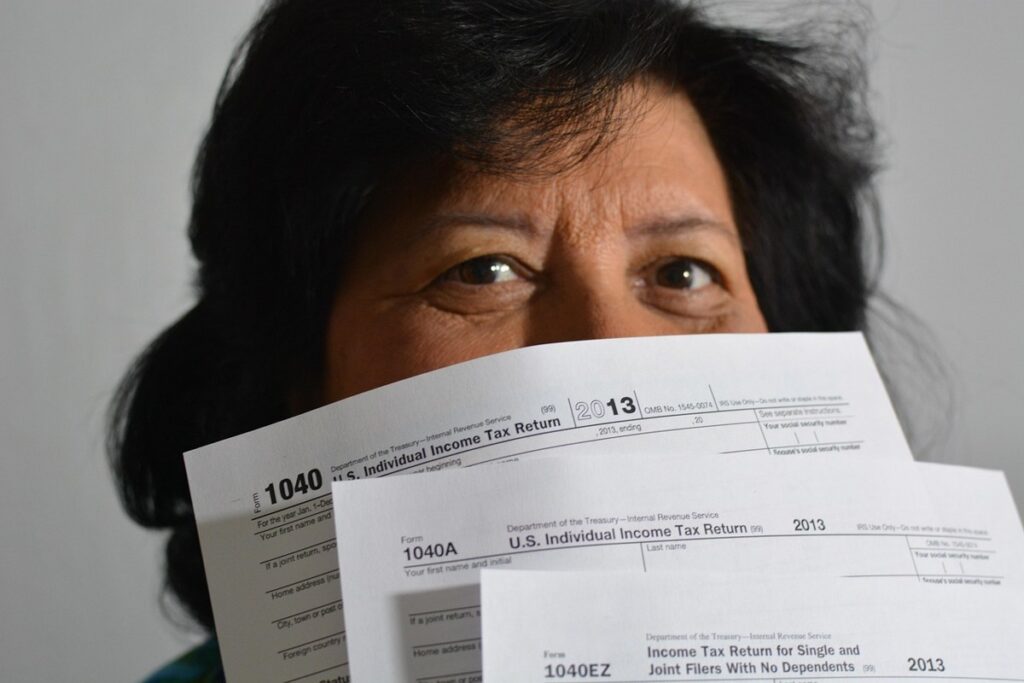
The IRS has added an IRS Form 1040 citizenship question to the draft 2026 return, published on September 17, 2026, asking every filer and any joint-filing spouse whether they are a U.S. citizen, U.S. national or an alien lawfully authorized to work in the U.S.
Eleven Senate Democrats have asked IRS chief executive Frank Bisignano to drop it. The agency has not said whether it will, and the form still needs approval from the Office of Management and Budget before it is final.
For preparers the draft raises a practical problem ahead of the 2027 filing season. The IRS Form 1040 citizenship question sits on page 1, the instructions that would explain it have not been released, and a second new form, Schedule 3-A, applies a different and stricter test to four refundable credits. Firms that file for ITIN holders, mixed-status families and foreign business travellers will need to know which test applies to which client.
Article Sponsor · your logo, one line and a link inside every article
What the IRS Form 1040 citizenship question asks
The draft puts the question in a new “Other Information” section near the top of the front page. It reads: “At the time you file your return, are you, and your spouse if filing jointly, a U.S. citizen, U.S. national, or an alien lawfully authorized to work in the U.S.?” Each spouse has separate Yes and No boxes.
A second new line asks filers who treat a nonresident or dual-status alien spouse as a U.S. resident for the entire tax year to check a box and enter the spouse’s name, attaching a statement if required.
The wording ties the answer to the date of filing, not to the tax year. A client whose work authorisation lapsed in March, or began in April, could answer differently depending on when the return goes in.
The IRS draft forms page carries the standing warning that drafts are not to be filed and that nothing in them should be relied on. The instructions are listed as “see instructions” on the form itself and have not been published. The IRS has not said whether a blank answer would be treated as an error, or what consequences follow from a wrong one.
Schedule 3-A sets a different test for credits
The draft Schedule 3-A, “Federal Public Benefit”, was created on June 24, 2026. Filers complete it only if they claim the earned income credit, the additional child tax credit, the refundable American opportunity credit or the refundable adoption credit.
Line 8 asks: “Are you or your spouse a U.S. citizen, U.S. national, or qualified alien?” A Yes answer puts 0 on Form 1040 line 32b. A No answer enters the refundable amount from line 6 on line 32b, which reduces the refundable credits the taxpayer receives.
The test is narrower than the page 1 question. A qualified alien includes lawful permanent residents, asylees and refugees. A work permit alone does not make someone a qualified alien, so a filer can answer Yes on page 1 and No on Schedule 3-A.
Schedule 3-A follows proposed regulations that the Treasury and the IRS announced on August 19, 2026 in release IR-2026-93. They would treat the refunded portion of the adoption, child tax, American opportunity and earned income credits as a federal public benefit under the Personal Responsibility and Work Opportunity Reconciliation Act of 1996.
The IRS said the proposal follows analysis by the Justice Department’s Office of Legal Counsel. Recipients would have to be citizens, nationals or qualified aliens on the date they file the first return claiming the credit, and would declare eligibility under penalty of perjury. On a joint return, only one spouse needs to qualify.
Ineligible taxpayers could still claim the part of a credit that offsets income tax liability, if they otherwise qualify.
Treasury Secretary Scott Bessent said: “Under President Trump, the days of illegal aliens collecting taxpayer-funded benefits are over.” Bisignano said the regulations ensure that federally funded benefits are reserved for eligible taxpayers.
Timeline and whether the question is mandatory
The proposed regulations would apply to tax years ending on or after the date final regulations are published. Comments on them were due on October 4, 2026. If the rules are finalised by December 31, 2026, they could reach calendar-year 2026 returns filed in 2027. Until then, current rules apply.
The IRS has not published anything that says whether answering the Form 1040 citizenship question on page 1 is mandatory, or what happens if a filer leaves it blank. Comments on the draft form go to IRS.gov/FormsComments, with “NTF1040” in the message body.
Vialto Partners, a provider of cross-border tax and immigration services, said the page 1 question could still change. Whether the final 1040 asks it next season, and in later years, remains unanswered.
Senators warn the question will cut filing
Sen. Ben Ray Luján, a New Mexico Democrat, and Sen. Ron Wyden, the Oregon Democrat who is the Finance Committee’s ranking member, led nine colleagues in a letter to Bisignano urging the IRS to drop the Form 1040 citizenship question.
They wrote that adding the question “for the first time in history appears to serve no legitimate tax administration purpose” and that “turning the 1040 into an immigration tracker actively sabotages voluntary tax compliance”. Putting it on the front page, they said, “will only discourage people from filing altogether.”
The senators cited a Yale Budget Lab estimate that deterring filing could cost the government $313 billion over a decade, and noted that unauthorised workers pay about $66 billion in taxes a year. They also pressed Treasury to release its updated tax gap estimate, almost a year overdue. The last, published in October 2024, put the annual gap near $700 billion for 2022.
The letter points to the IRS’s handover of taxpayer data to Immigration and Customs Enforcement as a cause of public distrust. Nothing in the sources reviewed shows how many people would stop filing, and the Yale figure is a modelled estimate.
Section 6103 and the ICE data-sharing fight
Return information is confidential under section 6103 of the Internal Revenue Code. Disclosure is barred unless the Code authorises it. One exception, section 6103(i), covers non-tax federal criminal matters and sets requirements for written requests or court orders.
The IRS used a data exchange procedure to answer ICE requests for taxpayers’ last known addresses, and nearly 47,000 records went across before a district court intervened. In September 2026 a unanimous D.C. Circuit panel upheld the injunction, in a ruling written by Judge Cornelia Pillard. It found the procedure likely failed the statute, “most egregiously” because ICE did not have to supply an actual taxpayer address.
That ruling concerns addresses, not the answer to the IRS Form 1040 citizenship question. Nothing in the draft or the IRS announcement says how the new answers would be stored or shared. Manish Daftari, a partner at Vialto Partners, said the anxiety comes from the possibility that information once walled off is now exchanged.
“All of it together is creating pressure, and being an immigrant is becoming more onerous.”
Manish Daftari, Partner, Vialto Partners
Daftari said citizens and Green Card holders will probably answer without concern. His worry is undocumented filers, who he said do file returns and fear the answers will reach immigration officials.
What the question means for ITIN filers and firms
Julie Baron, a global mobility partner at Vialto, said many credits turn on Social Security numbers for the taxpayer and dependents, not on an ITIN. She said the question could surface filers claiming credits they are not entitled to, which is the fraud argument the IRS has made for the regulations.
Baron also flagged short-term business travellers who file for their U.S. workdays under a visa waiver programme or a visa that permits meetings but not employment. Because the question speaks to authorisation at the time of filing, she said, they may be unsure how to answer.
The sources reviewed did not turn up comment letters from the AICPA, the National Association of Enrolled Agents or the National Association of Tax Professionals, and none is cited here.
Firms can prepare without waiting for the instructions. A client file that records each spouse’s status and work authorisation dates is the first step. The tax season engagement and consent kit is a starting point for engagement terms and client consent, though it does not address this question.
Software vendors and IRS e-file users will need to see how the final schedules handle a blank or No answer. The same uncertainty applies to clients who use free DIY filing options, where nobody is available to explain the difference between the two tests.
The IRS has to release the instructions and secure OMB approval before the 2026 forms are final, and Treasury must decide whether to finalise the Schedule 3-A regulations by December 31 for them to reach 2026 returns.
Accountio.
The go-to weekly newsletter for accounting professionals. Trusted by 10,000+ industry leaders to deliver the tech trends and insights that matter most. Join them today.