HMRC Raises Late Payment Interest on Overdue Tax to 8%
HMRC lifted late payment interest on overdue tax to 8% on November 24, after the Bank of England raised its base rate to 4%.
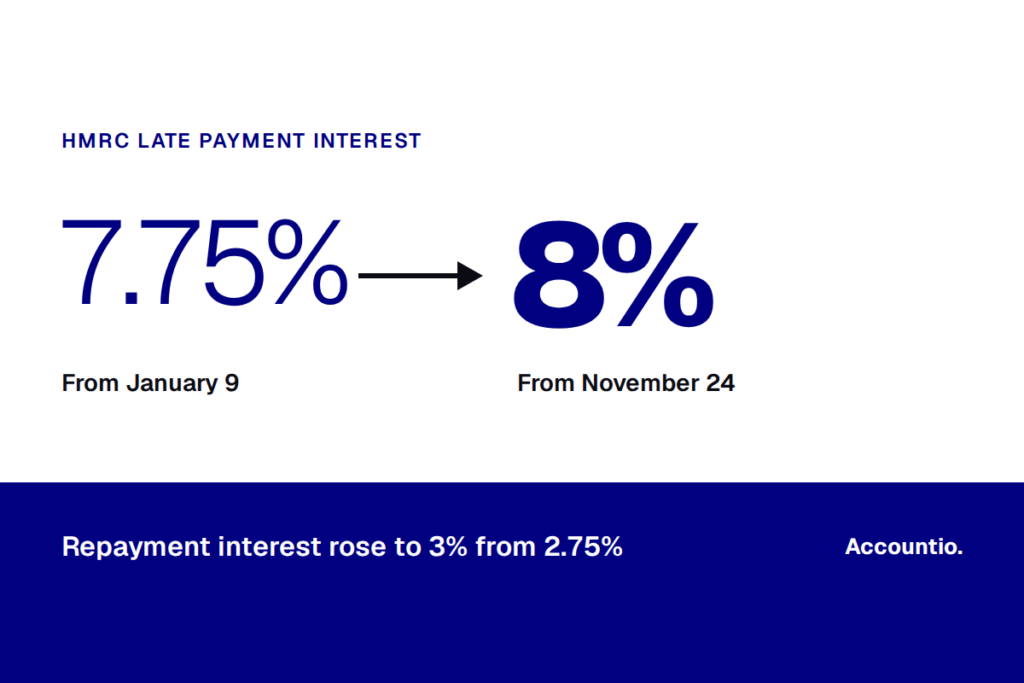
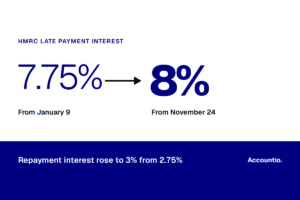
HMRC on November 24 raised late payment interest on overdue tax to 8% from 7.75%, a change that companies need to apply when forecasting the cost of unpaid bills.
The increase raises the cost of paying Income Tax, National Insurance, VAT, Capital Gains Tax and Corporation Tax late, and it applies to existing arrears as well as new ones. It follows the Bank of England’s decision on November 5 to raise Bank Rate to 4% from 3.75%, because HMRC’s rates are linked to that benchmark.
Interest on money HMRC repays also rose, to 3% from 2.75%, which leaves a gap of five percentage points between what late payers are charged and what overpayers receive. Finance teams estimating what they owe HMRC also have a second date to track, since the rate for quarterly instalments changed earlier, on November 16.
Accountio.The go-to weekly newsletter, straight to your inbox.Weekly newsletter, straight to your inbox.
How HMRC set the new late payment rates
HMRC announced the changes on November 6, a day after the Monetary Policy Committee’s decision. The committee voted 8-1 for the quarter-point rise, with Catherine Mann preferring an increase of half a point.
Late payment interest is set in legislation at the base rate plus four percentage points, while repayment interest is the base rate minus one point, with a floor of 0.5%. The published table of HMRC interest rates shows that the previous 7.75% late payment rate had applied since January 9.
The 8% level is not new, as it also applied from August 27, 2025 until the January reduction. It remains below the 8.5% charged from April 6, 2025, when the margin over the base rate increased to four points from 2.5.
The government said the wider margin was intended to encourage payment on time, raise revenue and be fair to those who pay when due. It forecast that the change would raise £260 million in 2026 to 2027 and £215 million in each of the following three years.
“Now that interest rates are rising once again, so too are the rates applied to those paying their tax bills late.”
Ezra Dulberg, Director, Tax Dispute Resolution, BDO
Which taxes carry HMRC’s 8% rate
The 8% charge covers the main taxes handled by businesses, their advisers and individual taxpayers:
- Income Tax and National Insurance contributions, including amounts employers owe through PAYE
- Capital Gains Tax
- VAT for accounting periods starting on or after January 1, 2023
- Corporation Tax due under the normal pay and file rules
- Inheritance Tax, Stamp Duty Land Tax, Stamp Duty and Stamp Duty Reserve Tax
Interest is separate from penalties, so a late payer can face both. For VAT, HMRC charges a first penalty of 3% of the amount outstanding at day 15 when payment is at least 16 days overdue, and a further 3% of the balance outstanding at day 30 when it is 31 days or more late. A second penalty then accrues daily at an annual rate of 10%.
Employers paying PAYE monthly must get the money to HMRC by the 22nd of the next tax month when paying electronically, and may face penalties as well as interest if they miss it. Taxpayers who cannot pay in full can apply for a Time to Pay arrangement, although interest continues to accrue until the debt is cleared.
Businesses charge each other statutory interest on late commercial invoices under separate rules, at eight percentage points above base rate.
What 8% adds to a Corporation Tax bill
A company that owes £50,000 of Corporation Tax and pays 90 days late would incur about £986 of interest at 8%, assuming the rate stays unchanged throughout. At 7.75%, the same delay would have cost about £955, so the quarter-point rise adds roughly £31.
Over a full year, interest on that £50,000 balance comes to £4,000 instead of £3,875, a difference of £125. The daily charge is about £10.96, calculated as simple interest on the outstanding amount.
The sums scale with the debt, so a £500,000 balance left unpaid for 90 days would carry about £9,863 of interest at the new rate. Late payment interest paid to HMRC is deductible for Corporation Tax purposes, which reduces the after-tax cost for a company with taxable profits.
Large companies paying by instalments face a different rate before the normal due date. Interest on underpaid quarterly instalments rose to 6.5% from 6.25% on November 16, while the rate on overpaid instalments and early Corporation Tax payments increased to 3.75% from 3.5%.
On a £500,000 instalment shortfall lasting 90 days, the 6.5% rate produces about £8,014 of interest, roughly £308 more than at 6.25%. Companies with annual profits above £1.5 million generally pay in instalments, and that threshold is reduced where a company has associated companies.
HMRC pays 3% on tax it repays
The repayment rate is five points below the late payment rate. Using the £50,000 example, 90 days of repayment interest at 3% would be about £370, compared with the £986 charged on a late payment of the same size and duration.
BDO said taxpayers under HMRC enquiry can make a payment on account to limit late payment interest if the disputed tax ultimately proves due, although any amount later found not to be owed is returned with interest only at the repayment rate.
The choice therefore turns on the expected outcome of the enquiry, the company’s cost of borrowing and the cash it can spare. A business borrowing at less than 8% to settle an undisputed liability would pay less in interest than it would by leaving the tax outstanding, before any arrangement fees or penalties are taken into account.
Filing requirements and HMRC deadlines
Since HMRC closed its free filing service on March 31, companies have generally needed commercial software to send Corporation Tax returns. Paper returns are accepted only where a company has a reasonable excuse or is filing in Welsh.
HMRC publishes a list of Corporation Tax software suppliers, including products that can file a return and annual accounts together.
Any interest forecast should reflect HMRC’s two effective dates: November 16 for quarterly instalments and November 24 for other payments. Calculations that span either date need the old rate for the days before it and the new rate from then on.
For large companies, HMRC calculates instalment interest only after the return is submitted or the liability is determined, so a forecast made before then remains an estimate. Cash forecasts should also separate interest from penalties, since the two follow different rules.
Accounting firms can apply the same check to client arrears, including balances already under Time to Pay arrangements. Individuals in Self Assessment, including those now within MTD for Income Tax, face their next major payment deadline on January 31, 2027.
For companies, the due date is generally nine months and one day after the accounting period ends where taxable profits do not exceed £1.5 million, which means a business with a February 28, 2026 year end must pay by December 1. The Bank of England’s next rate decision is due on December 17, and any change in Bank Rate would feed through to HMRC’s interest rates.
Accountio.
The go-to weekly newsletter for accounting professionals. Trusted by 10,000+ industry leaders to deliver the tech trends and insights that matter most. Join them today.