FASB Proposes Easing Accounting for Commodities Held by Banks
FASB proposed on November 23 that banks and lenders may measure tangible commodity inventories at fair value, with comments due January 7, 2027.
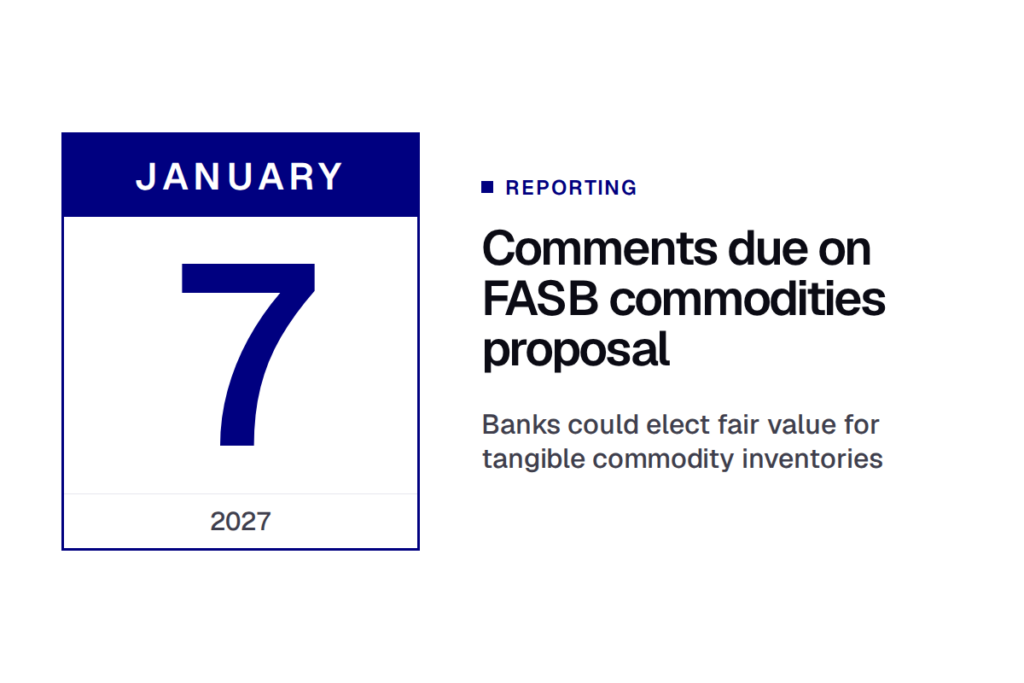
The Financial Accounting Standards Board on November 23, 2026 issued a proposed Accounting Standards Update that would let banks and other lenders measure tangible commodity inventories at fair value, with comments due by January 7, 2027. The FASB commodities accounting proposal would change how these institutions report physical holdings that they trade rather than process.
For finance teams at depository and lending institutions, the change would alter earnings. Those institutions now carry tangible commodity inventories at the lower of cost and net realizable value, while the derivatives they use to manage the price risk of the same commodities are measured at fair value. The two measures move at different times, so a hedged position can produce earnings volatility that does not reflect how it is managed.
The proposed update, titled Inventory: Commodities Held by Depository and Lending Institutions (Subtopic 330-20), would add an optional accounting policy election. Banks and other institutions within its scope could use it to measure these inventories at fair value instead of at cost.
Accountio.The go-to weekly newsletter, straight to your inbox.Weekly newsletter, straight to your inbox.
What the proposal changes
Under the proposal, an institution would make the election by type of tangible commodity, not for the whole inventory at once. A bank could therefore choose fair value for one commodity it trades and keep cost-based measurement for another, as long as it applies the choice consistently within each type.
The FASB would also require enhanced disclosures from institutions that make the election. Those disclosures would give investors and regulators a way to see which commodities are carried at fair value and how the election affects the financial statements.
The board gave its reasons in the proposal. Stakeholders recommended that a fair value measure would best depict how these positions are managed, particularly for institutions that trade commodities without processing or refining them. Cost-based measurement is less meaningful in that setting, according to the document.
Commodities accounting practice already varies. Some financial institutions measure tangible commodity inventories at fair value today, which the FASB describes as diversity in practice, and an explicit election would put that treatment on a defined footing in US GAAP.
Who the proposal applies to
The scope is limited to depository and lending institutions, the entities covered by Topic 942, Financial Services: Depository and Lending. The FASB settled that scope at its meeting on May 27, 2026, when it chose a fair value election on a per-commodity-type basis for those entities and directed staff to draft the proposed update.
Corporate treasuries, commodity producers and other businesses that hold commodity inventories are outside the proposal. They would continue to apply the existing inventory guidance, and the proposal does not change it.
The board also set a 45-day comment period at that May meeting. The proposal’s release on November 23 puts the close of that period at January 7, 2027, a date that falls after the year-end close for calendar-year reporters.
Why fair value is easier than hedge accounting
Banks that want to offset the mismatch today generally have to apply hedge accounting, which brings documentation and effectiveness requirements. The FASB said in the proposal that applying the accounting policy election is expected to be less complex and less costly than applying hedge accounting.
That comparison matters for controllers and for the firms that audit them. Hedge accounting needs designation at inception, ongoing assessment and support for each hedging relationship, while a fair value election would bring the inventory onto the same measurement basis as the derivative without that machinery.
On May 27, 2026 the board also took up limited improvements to hedge accounting guidance, and the commodities project sits next to it in the board’s financial instruments agenda. The commodities project itself was added to the technical agenda after feedback on the board’s 2025 agenda consultation.
Richard Jones, chair of the FASB, has framed the broader question for the board as whether there are new transactions that put pressure on existing accounting and financial reporting models.
What banks and advisers should do before January 7
Institutions with physical commodity positions can respond by January 7, 2027 through the FASB’s comment process. Treasury and financial reporting teams will need to identify which commodity types they hold, whether they already use fair value, and what systems changes the disclosures would require.
Auditors and advisers to banks have a similar task. The election is made by commodity type, so exposure is mapped at that level for banks that hold commodity inventory through lending or trading arms. Practices that brief clients on reporting changes can use client letters to set out what an election would do to reported earnings.
What comes next for the FASB proposal
After comments close on January 7, 2027, the FASB staff will analyse the responses and the board will redeliberate the proposal in public meetings. The board then decides whether to issue a final update, and it would set the effective date and transition requirements at that stage.
Accountio.
The go-to weekly newsletter for accounting professionals. Trusted by 10,000+ industry leaders to deliver the tech trends and insights that matter most. Join them today.