Data retention schedule template for accountants
How long your firm keeps each type of record, when the clock starts and how the record is deleted at the end. This data retention schedule template is one Excel sheet with the rows filled in for practice work, from tax working papers to AML checks.
UK practicesGet this pack and 100 more for $129
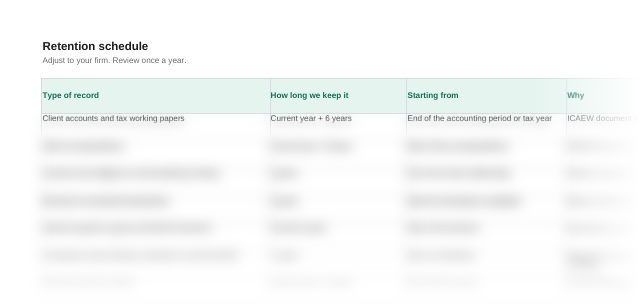
What the schedule looks like
Why you need one
The UK GDPR says personal information must not be kept in a form that identifies people for longer than you need it, and your firm must be able to show it follows that rule. A written schedule is how you show it.
- Your record of processing needs a retention period for each type of data
- Your privacy notices must tell clients and staff how long you keep their information
- The Money Laundering Regulations require you to delete AML personal data once the five-year period ends, unless another law, legal proceedings or the person's consent means you keep it
- You are clearing old files, moving to new software or closing a practice
- Your professional body or insurer asks how long you keep working papers
How to use the data retention schedule template
- Check each row against your firm. Change the periods where your professional indemnity insurer asks for longer, and delete rows that don't apply.
- Add your own record types. Use the empty rows for anything else you hold, such as audit files, CCTV or a client portal.
- Name who does the deletion. Fill in a person or role for each row so nothing is left to chance.
- Pick a deletion method. Choose from the list in the How we delete it column.
- Note any hold. When a complaint, claim or investigation is open, record it in Exceptions and notes and keep the files.
- Run it once a year. Delete or anonymise everything past its period and note the date you did it.
Questions
What is a data retention schedule?
A list of every type of record your firm holds, how long you keep it, when that period starts and what happens to it at the end. It turns the storage limitation rule in the UK GDPR into dates your team can follow.
How long should accountants keep client working papers?
ICAEW's document retention guidance gives current year plus six years for accounts working papers. Tax records generally run to the sixth anniversary of the end of the period they relate to.
How long do you keep anti-money laundering records?
The Money Laundering Regulations 2017 require customer due diligence records to be kept for five years from the end of the business relationship, or five years from completion for an occasional transaction. After that the personal data must be deleted unless another law, legal proceedings or the person's consent means you keep it.
How long should payroll records be kept?
GOV.UK says employers must keep PAYE records for three years from the end of the tax year they relate to. ICAEW's guidance gives current year plus six years as best practice for practices that run payroll.
How long must Companies House identity checks be kept?
Authorised corporate service providers must keep records of the identity checks they carry out for seven years.
Also in the UK GDPR pack for practices
Who it's for
Accountancy practices that want one sheet setting out how long each record is kept and when it goes.
Last checked
Checked against the Money Laundering Regulations, ICAEW's document retention guidance and GOV.UK in November 2026.