Credit control policy template for finance teams
Set how your company gives credit, bills customers, chases late payment and looks after cash and bank accounts, with a day-by-day chasing timetable. This credit control policy template is one Word policy with suggested terms and limits you change to suit.
Finance teamsGet this pack and 100 more for $129
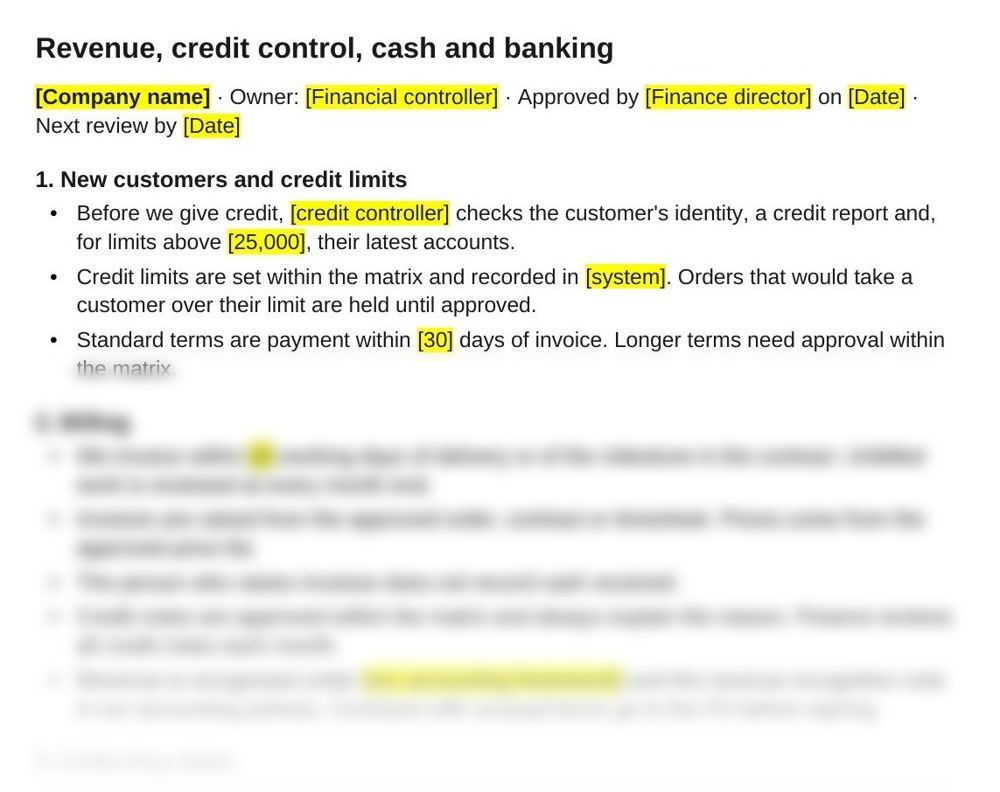
What the policy looks like
When you need it
Any company that sells on credit needs written rules for who gets credit, how invoices go out and what happens when customers pay late. Adopt the policy or review it when:
- Your aged debtors report is growing, or the same customers pay late every month
- You take on a credit controller, or the job passes to someone new
- You start selling on credit to larger customers or into new markets
- Auditors or lenders ask how you set credit limits and write off debts
- A credit note or write-off went through that nobody approved
How to use the credit control policy template
- Set your terms and limits. Payment terms, the credit check threshold and the signatory limit are suggestions in brackets. Match them to your delegated authority matrix.
- Adjust the chasing timetable. Change the days and who acts at each stage to fit your customers.
- Decide on late payment interest. Keep the optional line if you charge statutory interest, and add the warning to your final notice.
- Name the people and systems. Fill in the credit controller, the person who keeps the bank mandate list and where credit limits are recorded.
- Set your cash rules. Enter the petty cash float, the minimum cash level that goes to the board and where surplus cash may be placed.
- Name the owner and approver. Add the next review date and tell the sales and finance teams where the policy lives.
Questions
What should a credit control policy include?
How you check customers before giving credit, how credit limits and payment terms are set, when invoices go out, a timetable for chasing late payment, who approves credit notes and write-offs, and whether you charge late payment interest.
What is a credit control procedure?
The step-by-step part of the policy: what happens on each day after an invoice falls due, who does it and when the account goes on hold or is passed to collectors. This policy sets it out as a table from seven days before the due date to 60 days after.
Can I charge interest on late payments?
Yes, for business customers. Under late payment law you can claim statutory interest of 8% plus the Bank of England base rate, unless your contract sets a different rate. Send a new invoice if you add interest.
How much compensation can you claim for a late payment?
A fixed sum of £40, £70 or £100 for each late payment, depending on the size of the debt, on top of interest. You can charge it once for each payment.
What payment terms can a business set?
If you agree a payment date with another business, it must usually be within 60 days, or 30 days for public authorities. A longer period must be fair to both sides. With no agreed date, a payment is late 30 days after the customer gets the invoice or the goods, whichever is later.
Also in the finance policies and procedures manual
Who it's for
Finance directors, financial controllers and credit controllers who want one clear set of rules for credit, collections and cash.
Last checked
Checked against GOV.UK guidance on late commercial payments in November 2026.