Dormant company accounts template for UK limited companies
Prepare the annual accounts for a company that had no significant accounting transactions in the year: a balance sheet with the audit exemption statements in the right place, short notes and a checklist to run before filing. This dormant company accounts template is one Word document, laid out ready for the director to sign.
UK practicesGet this pack and 100 more for $129
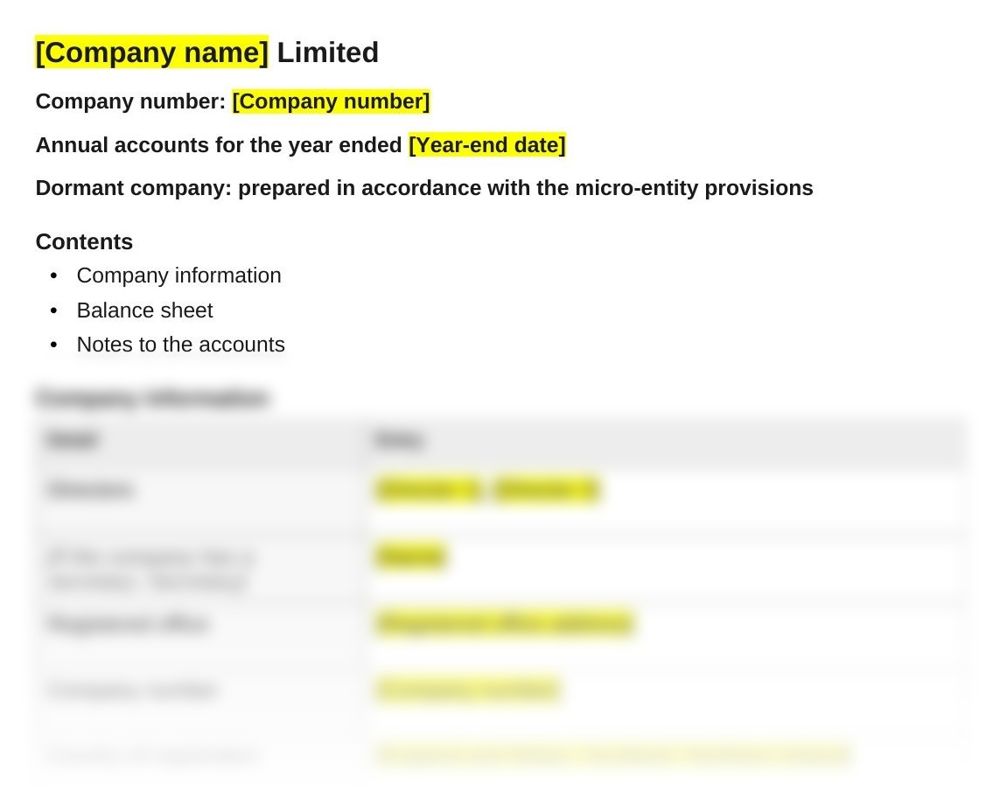
What the accounts look like
Who needs one
A company is dormant under the Companies Act 2006 for any period in which it has no significant accounting transactions. It still files accounts and a confirmation statement at Companies House every year. Use these accounts for:
- A company formed to protect a name or hold a future business that has not started trading
- A company that has stopped trading and has no other income, such as interest or rent
- A company kept on the register while the owners decide whether to restart or close it
- A practice client whose only activity in the year was paying the Companies House fees
How to use the dormant company accounts template
- Check the company is dormant. Work through the first part of the checklist. Shares taken on formation, Companies House fees and late filing penalties are ignored. Anything else entered in the accounting records ends dormancy.
- Fill in the company details. Company name, number, year end, directors and registered office. Pick the country of registration.
- Enter the balance sheet. Most dormant companies show only the share capital. Copy last year's figures from the accounts already filed.
- Choose the note wording. Dormant since incorporation or since the previous year end. Keep the confirmation statement line if the company paid that fee.
- Sign and file. A director signs and dates the balance sheet below the statements. File at Companies House within nine months of the year end.
Questions
Do dormant companies need to file accounts?
Yes. A dormant company files annual accounts and a confirmation statement with Companies House every year, even when nothing has happened. A small dormant company can file dormant accounts with no auditor's report.
What can a dormant company pay and stay dormant?
Companies Act section 1169 ignores money paid for shares by the subscribers on formation, Companies House fees for a change of name, re-registration or the confirmation statement, and penalties for filing accounts late. Any other transaction that has to go in the accounting records means the company is no longer dormant.
What statements go on a dormant company balance sheet?
Three statements above the director's signature: that the company is exempt from audit under section 480 as a dormant company, that the members have not required an audit under section 476, and that the directors accept their duties for accounting records and preparing accounts. A micro-entity also states that the accounts follow the micro-entity provisions.
When are dormant company accounts due?
Nine months after the end of the accounting reference period for a private company. If the first accounts cover more than 12 months, they are due 21 months after incorporation, or three months after the end of the period if that is later.
Is dormant for Companies House the same as dormant for corporation tax?
No. HMRC treats a company as dormant when it has stopped trading and has no other income, and you tell HMRC separately. Once HMRC accepts it, the company files no Company Tax Return unless it receives a notice to deliver one.
Can any dormant company skip the audit?
Most can. The exemption is not open to traded companies, banks, insurers, e-money issuers and some investment firms, and members holding at least 10% of the shares can require an audit.
Also in the company secretarial pack
Who it's for
Accountancy practices filing accounts for clients' dormant companies, and directors of a dormant company doing it themselves.
Last checked
Checked against the Companies Act 2006 and Companies House and HMRC guidance on dormant companies in November 2026.