Petty cash book template (Excel) for small businesses
Record every payment from the cash tin and every top-up, keep a running balance and check it against a count of the cash each month. This petty cash book template is one Excel workbook, with totals by category ready for the year-end figures.
UK practices- In the pack
- Client bookkeeping pack
- Files
- 5, Word and Excel
Get the pack by email
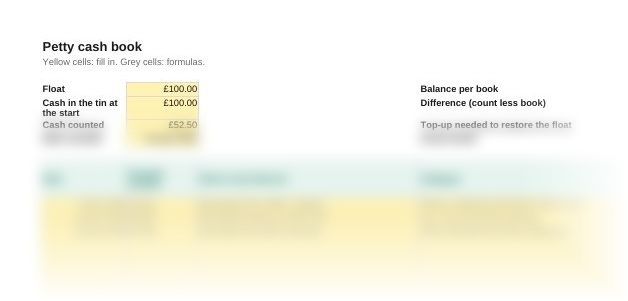
What the workbook looks like
When you need it
A petty cash book records the small cash payments made from a float kept on the premises, such as stamps, parking or cleaning materials, and the money paid in to top it up. HMRC lists petty cash books among the records a limited company keeps of the money it spends, and self-employed people must keep records of all their business expenses. Use this one when:
- A client pays for small items in cash and hands over a bag of receipts at the year end
- A shop, café or salon keeps a cash tin for day-to-day costs
- Staff pay for small items from the tin and each payment needs a receipt behind it
- The cash in the tin doesn't match what the client expects and nobody knows why
How to use the petty cash book template
- Set the float. Enter the amount you keep in the tin, for example £100, and the cash in it on the day you start.
- Number every receipt. Give each one a voucher number, such as PC001, then enter the date, who was paid and what for, the category and the amount.
- Record top-ups. Enter money put into the tin in the Cash in column. The top-up needed to restore the float shows at the top of the sheet.
- Count the cash each month. Enter the amount counted and the date. The difference between the count and the book should be zero.
- Clear the Check column. Fix anything it flags, delete the [Example] rows, and at the year end copy the category totals into the pack's income and expenses summary.
Questions
What is a petty cash book?
A record of small cash payments made from a float, and of the top-ups paid into it. Each entry shows the date, a voucher number, who was paid and why, the category and the amount, with a running balance of the cash that should be in the tin.
What records do I need to keep for petty cash?
A receipt for every payment, numbered to match its line in the book, plus the top-ups and regular cash counts. Self-employed people must keep records of all business expenses, and HMRC names receipts and petty cash books among a limited company's records of money spent.
How long should petty cash records be kept?
If you are self-employed, for at least five years after the 31 January submission deadline for the tax year. A limited company keeps its records for six years from the end of the last financial year they relate to, or longer in some cases, such as a late Company Tax Return or an open HMRC compliance check.
How do I top up petty cash?
Pay in the total spent since the last top-up, which brings the tin back to the float. The workbook shows the top-up needed at the top of the sheet, and you record it on a new row in the Cash in column.
What if the cash doesn't match the book?
The Count check shows Cash does not agree: check vouchers. Look for a receipt that was never entered, an amount in the wrong column, a top-up that wasn't recorded or a payment taken without a voucher.
Also in the client bookkeeping pack
Who it's for
Accountancy practices and bookkeepers whose sole trader and small business clients pay for small items in cash.
Last checked
Checked against HMRC's record-keeping rules for the self-employed and for limited companies in November 2026.