Employment contract template (UK) for accountancy practices
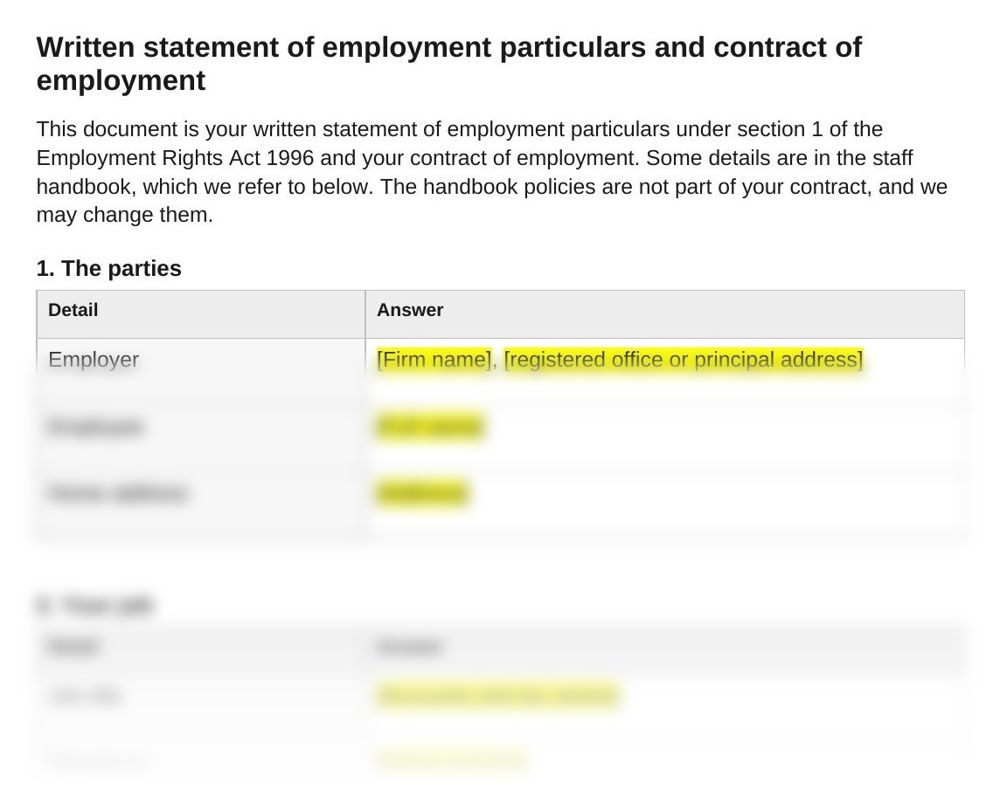
Give every new starter one document that is both their written statement of employment particulars and their contract, with the clauses a practice needs for busy season, client data and professional rules. This employment contract template is one Word document, ready for your firm's details.
UK practicesGet this pack and 109 more for $99
What the contract looks like
When you need it
Every employee and worker is entitled to a written statement of their main terms. Section 1 of the Employment Rights Act 1996 says it must be given no later than the day the job starts.
- You are taking on a new member of staff, trainee or part-timer
- Your current contracts predate the Employment Rights Act 2025 changes
- Someone's terms change, such as a move to part time or hybrid working
- Your practice is taking on staff for the first time
How to use the employment contract template
- Fill in the yellow fields. Names, job title, start date, salary, hours, holiday and the partner who hears appeals.
- Pick the options that apply. Overtime, company sick pay, hybrid working and the study cost repayment line each have their own wording to keep or delete.
- Check the restrictions. Set the length of the client and staff restrictions after leaving to suit the role.
- Give it on day one. Send it before or on the first day, with the staff handbook it refers to.
- Sign and file it. Both sides sign, and you keep a copy on the staff file. Confirm any later change in writing within one month.
Questions
Is an employment contract a legal requirement in the UK?
A contract exists as soon as someone accepts a job, even if nothing is written down. What the law requires is a written statement of the main terms, which employees and workers must receive on or before their first day.
What is the difference between a written statement of employment particulars and a contract?
The written statement sets out the main terms the law lists, such as pay, hours, holiday and notice. A contract can say more, such as confidentiality and restrictions after leaving. This document does both in one.
What must a written statement of employment particulars include?
The names of employer and employee, job title, start date, pay and pay intervals, hours and days, holiday, sick pay, other paid leave, notice, place of work, how long the job is expected to last, probation, training and any benefits.
Can sick pay and notice details be in a separate document?
Yes. GOV.UK says details of sick pay, other paid leave and notice can be in a separate document given on day one, such as the staff handbook. Pensions, collective agreements and disciplinary and grievance procedures can follow within two months.
What does the Employment Rights Act 2025 change for contracts?
Statutory Sick Pay has been paid from the first day of sickness since 6 April 2026, and holiday records must be kept for six years. From 1 January 2027 employers must tell workers about their right to join a trade union, and unfair dismissal protection starts after six months.
Also in the practice employment pack
Who it's for
Small accountancy practices that want one contract for every new starter, written for practice work.
Last checked
Checked against the Employment Rights Act 1996, GOV.UK and Acas guidance on the Employment Rights Act 2025 in November 2026.