Payroll reconciliation template in Excel
Prove each pay run adds up before the money goes out, and that what you paid HMRC matches what the payroll says you owe. This payroll reconciliation template is one Excel workbook with a sheet for each check, for up to 100 employees and all twelve tax months.
UK practicesGet this pack and 100 more for $129
What the workbook looks like
When you need it
Employers report pay to HMRC on a Full Payment Submission on or before each payday, and pay PAYE by the 22nd of the next tax month, or by the 19th if paying by cheque through the post. A tax month runs from the 6th to the 5th. Reconcile:
- Every pay run, before the payment file goes to the bank
- Every tax month, once the PAYE payment has been made
- When the HMRC online account shows a different balance from your records
- At the tax year end, before the final submission
- When you take over a client's payroll part way through the year
How to use the payroll reconciliation template
- Clear the examples. Rows marked [Example] show how it works. Delete them before your first real pay run.
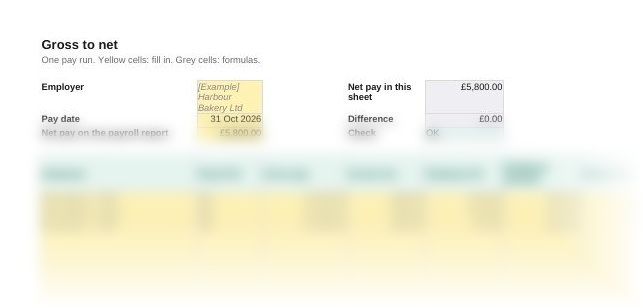
- Enter the pay run on Gross to net. One row per employee from the payroll report, then the net pay total from the report at the top. The Check cell shows OK when they agree.
- Agree payroll to bank. Enter what left the bank for net pay, pensions and other deductions. Each difference should be zero.
- Fill in the tax month on Payroll to HMRC. Enter the totals from the payroll and the Employer Payment Summary, then the amount paid and the date.
- Check the HMRC balance. Enter the balance shown in the HMRC online account. The sheet compares it with what it says is still owed.
Questions
What is a payroll reconciliation?
A check that the payroll figures agree with each other and with what was paid: each employee's gross pay less deductions equals net pay, net pay and pensions match the bank payments, and the PAYE due matches what went to HMRC.
How do you do a payroll reconciliation?
Start from the payroll report. Agree gross to net for each employee and the net pay total, then agree net pay, pensions and other deductions to the bank. Finally compare the PAYE due for each tax month with what you paid and with the HMRC online account.
When is PAYE due to HMRC?
By the 22nd of the next tax month if you pay monthly, or the 19th if you pay by cheque through the post. Quarterly payers pay by the 22nd after the end of the quarter, for example 22 July for the 6 April to 5 July quarter.
What reduces the amount paid to HMRC?
Statutory pay you can recover and the Employment Allowance. You claim them on the Employer Payment Summary by the 19th and pay HMRC the balance. The Payroll to HMRC sheet has a column for each.
How long should payroll records be kept?
HMRC requires them for three years from the end of the tax year they relate to. Keep each signed-off reconciliation with the payroll reports for that pay run.
Also in the payroll bureau pack
Who it's for
Payroll bureaux, practices that run client payrolls and in-house payroll staff in small businesses.
Last checked
Checked against HMRC's guidance on reporting to HMRC, paying PAYE and keeping payroll records in November 2026.