Quality of earnings template in Excel for M&A
Work out what a business really earns before you agree a price: take reported EBITDA, add or take off each adjustment with its evidence, and carry the result through net debt and working capital to the equity price. This quality of earnings template is one Excel workbook covering three periods, with management's figure and yours side by side.
Finance teamsGet this pack and 51 more for $79
Want every pack, for every region? Global library, 110 packs, $99
What the workbook looks like
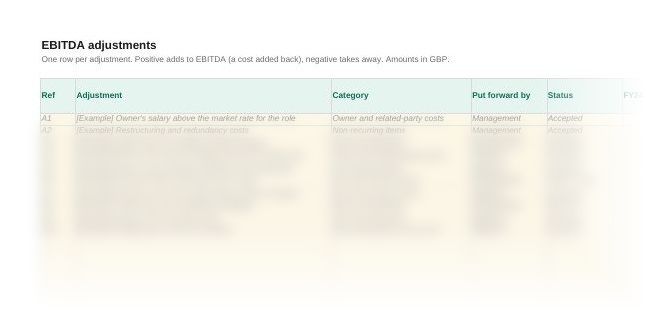
When you need a quality of earnings analysis
A quality of earnings analysis tests whether the profit a seller reports is recurring and supported, by adjusting reported EBITDA for one-off, out-of-period and owner-related items. Buyers use it to check the price, and sellers use it to prepare for questions. Use this one when:
- You are buying a company and the price is a multiple of EBITDA
- The seller's information memorandum shows an adjusted EBITDA you need to test line by line
- You are preparing your own business for sale and want to answer the buyer's adjustments first
- The purchase agreement adjusts the price for net debt and working capital at completion
How to use the quality of earnings template
- Fill in Settings. Name the target and the three periods, enter the last balance sheet date, the first of the 24 working capital months and the headline enterprise value.
- Enter the reported figures. Revenue, operating profit, depreciation and amortisation for each period from the accounts. Add the management accounts EBITDA to check the opening figure.
- List every adjustment. One row each, with a category, who put it forward and the evidence. Mark each one Accepted, Under review or Rejected.
- Build net debt and the peg. Enter each balance once. An item taken off the price is set to No in working capital, so nothing is counted twice.
- Read the Summary. Check adjusted EBITDA, the equity price and the Check line, which says OK only when every sheet is complete.
Questions
What is a quality of earnings report?
A report for a buyer or seller of a business on how much of the reported profit is recurring. It starts from reported EBITDA, lists each adjustment with its reasons and evidence, and usually covers net debt and working capital as well.
What is the difference between quality of earnings and an audit?
An audit gives an opinion on whether the annual accounts give a true and fair view. A quality of earnings review asks a different question: what the business earns on a normal, recurring basis, so a buyer can set a price.
What is adjusted EBITDA?
Reported EBITDA after taking out items that will not recur or do not reflect the business going forward, such as restructuring costs, an owner's salary above the market rate or income booked in the wrong year.
What is a working capital peg?
The normal level of working capital the buyer expects to receive with the business, often the average of the last 12 month ends. If working capital at completion is above the peg the price goes up, and if it is below the price goes down.
What are debt-like items?
Amounts that are not bank debt but will cost the buyer cash after completion, such as tax owed for earlier periods, unpaid bonuses, deferred consideration or overdue supplier invoices. They are taken off the price alongside net debt.
Also in the m&A financial due diligence
Who it's for
Finance teams and advisers buying a company, and finance directors preparing a business for sale.
Last checked
Checked against the Companies Act 2006 auditor's report rules in November 2026.