Payroll engagement letter template for UK practices
Set out what your payroll service covers, from each pay run to the year-end forms, and what the client must send before every payday. This payroll engagement letter template uses a payroll schedule that works with the pack's covering letter and terms of business, so the client signs one complete engagement.
UK practices- In the pack
- Engagement letter pack
- Files
- 12, Word
Get the pack by email
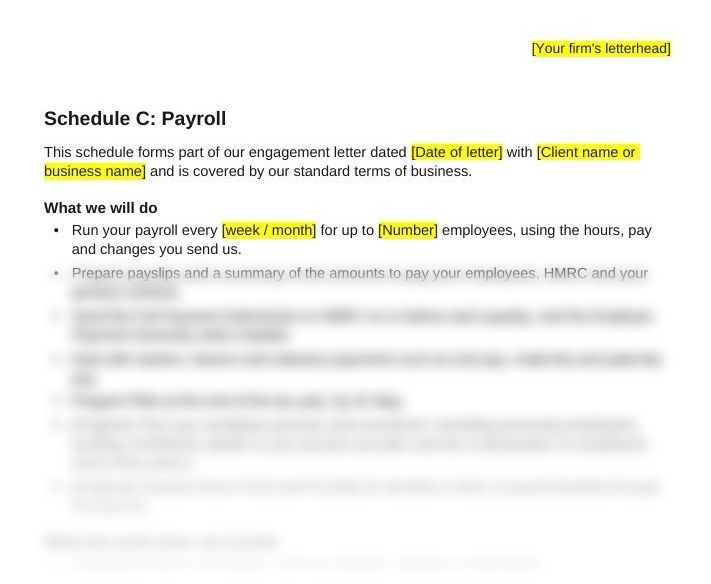
What the schedule looks like
When you need it
Send it to every client whose payroll you run, before the first pay run. AAT's Client Care policy says members must give every client an engagement letter before any professional work starts. The pack holds the three pieces you send together: the covering letter with its services table and signed confirmation page, the standard terms of business, and this schedule.
- A client takes on their first employee, or a company starts paying its director through payroll
- An accounts or bookkeeping client moves their payroll to you
- You add auto-enrolment or benefits in kind to a client's payroll service
- A client's headcount grows past the number of employees in the current schedule
How to use the payroll engagement letter template
- Start with the covering letter. Tick payroll in its services table and add the fee, then add schedules for any other services.
- Set the pay frequency and headcount. Weekly or monthly, and the most employees the fee covers.
- Keep or delete the optional lines. Auto-enrolment and benefits in kind stay in only if you have agreed them.
- Fill in the client's cut-off. The number of days before payday that hours and changes must reach you.
- Send all three together. Covering letter, terms of business and schedule, with the confirmation page for the client to sign.
Questions
What should a payroll engagement letter include?
How often you run payroll and for how many employees, the submissions and forms you prepare, the work you won't do, the client's cut-off before each payday and the fee. The covering letter and terms of business add your firm's details, payment terms, liability and complaints.
When must the Full Payment Submission reach HMRC?
On or before each payday, even if the employer pays HMRC quarterly. HMRC must then receive the payment by the 22nd of the next tax month, or the 19th if paying by post.
When do employees get their P60?
Every employee working for the employer on 5 April must get a P60 by 31 May, on paper or electronically.
Does payroll include pension auto-enrolment?
Only if you agree it. The schedule has an optional line for assessing staff, sending contributions to the pension provider and the re-declaration of compliance, which The Pensions Regulator requires every three years.
When does payrolling benefits in kind become mandatory?
From 6 April 2027 for company cars, car fuel, vans, van fuel and employer-provided medical benefits, and from April 2028 for most other benefits. Loans and accommodation stay voluntary.
Also in the engagement letter pack
Who it's for
Bookkeepers, payroll bureaus and small firms who run payroll for clients and want each pay run's deadlines agreed in writing.
Last checked
Checked against AAT's Client Care policy, HMRC payroll guidance and The Pensions Regulator's re-enrolment rules in October 2026.