Bookkeeping engagement letter template for UK practices
Set out exactly what your bookkeeping service includes, what it leaves out and what the client must send you, and when. This bookkeeping engagement letter template uses a bookkeeping schedule that works with the pack's covering letter and terms of business, so the client signs one complete engagement.
UK practices- In the pack
- Engagement letter pack
- Files
- 12, Word
Get the pack by email
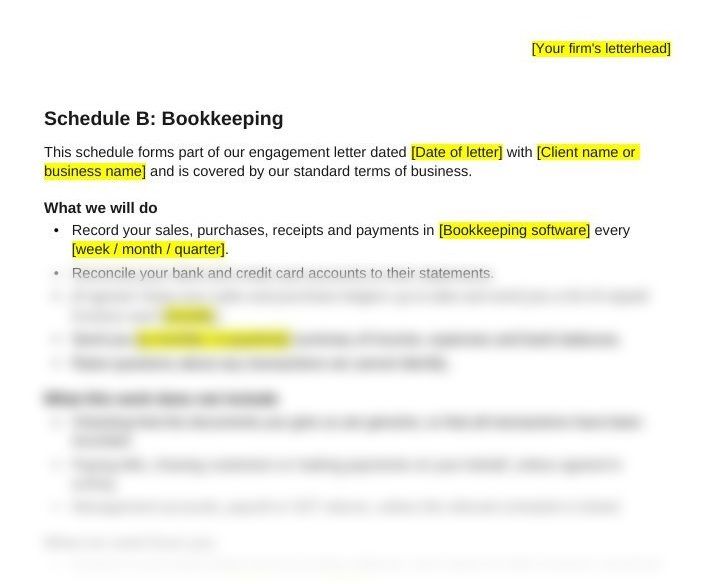
What the schedule looks like
When you need it
Send it to every client you keep the books for, before you start the work. AAT's Client Care policy says members must give every client an engagement letter before any professional work starts. The pack holds the three pieces you send together: the covering letter with its services table and signed confirmation page, the standard terms of business, and this schedule.
- You take on a new bookkeeping client
- An accounts or tax client asks you to keep their books as well
- A client moves from yearly to monthly or weekly bookkeeping
- You add ledgers or regular reports to the service
How to use the bookkeeping engagement letter template
- Start with the covering letter. Tick bookkeeping in its services table and add the fee, then add schedules for any other services.
- Set how often you do the work. Weekly, monthly or quarterly, and name the software you use.
- Keep or delete the optional lines. Ledgers and unpaid invoice lists stay in only if you have agreed them.
- Fill in the client's deadlines. The day each month their paperwork is due, and how many working days they have to answer questions.
- Send all three together. Covering letter, terms of business and schedule, with the confirmation page for the client to sign.
Questions
Do bookkeepers need an engagement letter?
AAT licensed members must give every client an engagement letter before any work starts. For everyone else it is the clearest record of what you agreed to do, what you left out and what the client must send you.
What should a bookkeeping engagement letter include?
The work you will do and how often, the work you won't do, what the client must send and by when, how records are kept, and the fee. The covering letter and terms of business add your firm's details, payment terms, liability, complaints and how either side can end the engagement.
Do bookkeepers need to register for money laundering supervision?
Yes. Bookkeeping for other people is an accountancy service under the Money Laundering Regulations. You must register with HMRC unless a professional body such as AAT, ACCA or ICAEW already supervises you, or all your customers are supervised themselves.
How long must bookkeeping records be kept?
Companies must keep records for six years from the end of the last financial year they relate to. Self-employed people must keep them for at least five years after the 31 January filing deadline for the tax year. Some records must be kept longer.
Can I use one engagement letter for bookkeeping and payroll?
Yes. Send one covering letter and one set of terms, and add a schedule for each service. The pack has separate schedules for bookkeeping, payroll, VAT and the other services.
Also in the engagement letter pack
Who it's for
Bookkeepers, sole practitioners and small firms who want each service written down clearly and signed before the work starts.
Last checked
Checked against AAT's Client Care policy and HMRC guidance on record keeping and money laundering supervision in October 2026.