Year-end accounts checklist for UK accountancy practices
Work through a client's year-end accounts in the same order every time, from records in to filing, with a sign-off for the preparer and reviewer. This year-end accounts checklist is one Word document for limited companies, sole traders, partnerships and LLPs.
UK practicesGet this pack and 109 more for $99
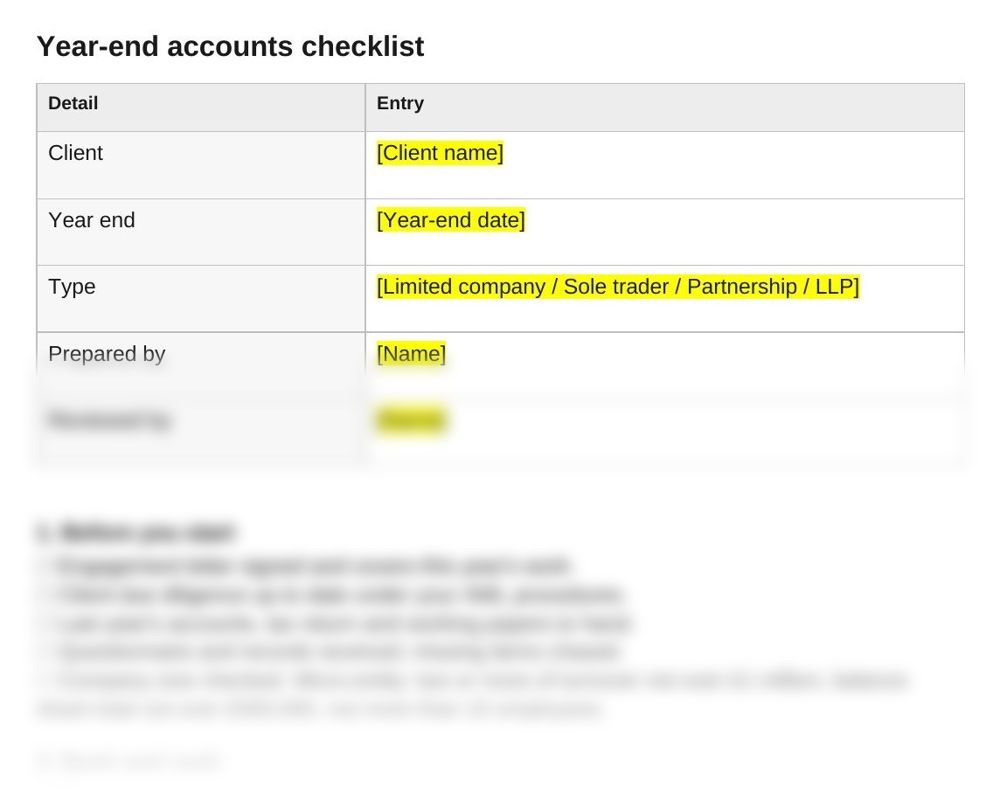
What the checklist looks like
When you need it
Every limited company files accounts at Companies House within nine months of its year end, and the same accounts back the company tax return. Use the checklist when:
- You prepare year-end accounts for small companies, sole traders or partnerships
- A junior or new member of staff prepares the accounts and a manager reviews them
- You want every file to show the same checks, done and signed off, for quality reviews
- A client's records arrive late and you need to see quickly what is still missing
How to use the year-end accounts checklist
- Fill in the details at the top. Client, year end, type of business and the names of the preparer and reviewer.
- Start with section 1. Confirm the engagement letter and due diligence, and check the company's size before you choose the accounts format.
- Tick each item as you go. Work through sections 2 to 8 against the records. Note anything the client has to confirm.
- Complete and review. Draft the accounts with the right statements above the director's signature, then clear the review points in section 9.
- Sign off and diarise. Record each stage in the sign-off table, file and pay on time, and put next year's dates in the diary.
Questions
What should a year-end accounts checklist include?
Bank and cash, sales and debtors, purchases and creditors, stock, fixed assets, tax and payroll, directors' loans and dividends, the statements in the accounts, approval and filing. Each step needs a tick and the file needs a preparer and reviewer sign-off.
When are year-end accounts due?
A private limited company files its accounts at Companies House nine months after the end of its accounting reference period. Corporation tax is paid nine months and one day after the end of the accounting period, and the company tax return is due 12 months after it.
Who signs the year-end accounts?
The board approves the accounts and a director signs the balance sheet on its behalf. The micro-entity or small companies statement and any audit exemption statements go above that signature.
What is a micro-entity?
A company that meets two or more of these tests: turnover of no more than £1 million, a balance sheet total of no more than £500,000, and no more than 10 employees. Micro-entities can file simpler accounts with fewer notes.
What happens to an overdrawn directors' loan at the year end?
If it is not repaid within nine months of the year end, the company pays section 455 tax on the amount still owed: 35.75% on loans made from 6 April 2026 and 33.75% on loans made from 6 April 2022 to 5 April 2026.
Also in the year-end accounts pack
Who it's for
Accountancy practices preparing year-end accounts for small limited companies, sole traders and partnerships.
Last checked
Checked against the Companies Act 2006 and HMRC's corporation tax deadlines in November 2026.