Schedule C expense template for 2026 (Excel)
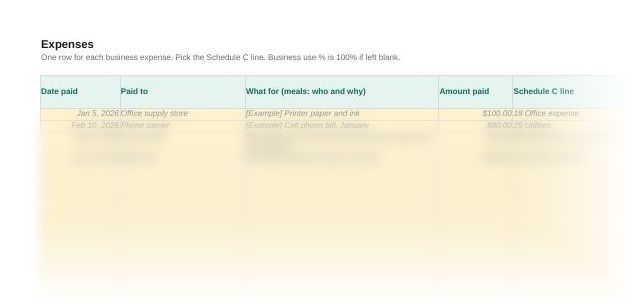
Give each self-employed client one sheet to log every business expense against the 2026 Schedule C line it belongs on, so the totals arrive sorted by line. This Schedule C expense template is the Expenses sheet of a free Excel tracker, with mileage, home office and quarterly totals on the other sheets.
US firms- In the pack
- Self-employed expense tracker
- Files
- 4, Word and Excel
Get the pack by email
What the tracker looks like
When to send the Schedule C expense template
A sole proprietor reports business expenses in Part II of Schedule C, lines 8 to 27b, before the home office on line 30. On the 2026 form, line 16 splits into mortgage interest (16a), vehicle loan interest (16b) and other interest (16c). Send the tracker when:
- A new self-employed or freelance client needs a way to keep records from the start of the year
- A client hands over a box of receipts and bank statements each spring
- You want each client's expenses already sorted by Schedule C line when they arrive
- You work out quarterly estimated tax and need the expenses for each period
How to use the Schedule C expense template
- Set up the workbook first. Fill in the Setup sheet with the client's name, the business and how they claim car costs, then delete the [Example] rows on Expenses.
- Log every expense as it is paid. Date, who was paid, what for and the full amount. Pick the Schedule C line from the list.
- Split shared costs. Enter the business use % for anything used partly for personal purposes. For meals, write who they met and why.
- Clear the Check column. Each row shows OK or a short instruction, such as adding a date or finding a receipt.
- Send it back each quarter. The Period column feeds the Quarterly totals sheet, and Summary by line gives the year's totals by line.
Questions
What expenses go on Schedule C?
Ordinary business costs, reported on lines 8 to 27b of Part II: advertising, car and truck, contract labor, insurance, interest, legal and professional fees, office expense, rent, repairs, supplies, taxes, travel, meals, utilities, wages and other expenses. Home office costs go on line 30 instead.
How much of a business meal can be deducted?
50% of the cost. The client logs the full amount on line 24b and the sheet counts half, so they never need to work out the split themselves.
Does every expense need a receipt?
IRS Publication 463 says documentary evidence such as a receipt is not needed for a travel, meal or gift expense under $75, other than lodging, if the log shows the amount, date, place and business purpose. Lodging always needs a receipt. For everything else the sheet asks for the receipt, bill or bank record.
Where do car costs go with the standard mileage rate?
With the standard mileage rate, the deduction is business miles times the rate, plus parking fees and tolls, and the client doesn't claim gas or repairs as well. The Mileage sheet handles this at 72.5 cents a mile to June 30, 2026 and 76 cents from July 1. With actual expenses, car costs go on Expenses under line 9 with the business use %.
Does sales tax go on line 23?
Only state and local sales tax imposed on the client as the seller, and if they collected it from the buyer it must also be in gross receipts on line 1. The Schedule C lines sheet explains this beside line 23.
Is the tracker free?
Yes. The whole tracker, the client guide and the cover letter are free. Enter your email and we send you the pack.
Also in the self-employed expense tracker
Who it's for
CPA firms, enrolled agents and tax preparers with sole proprietor, freelance and gig worker clients who file Schedule C.
Last checked
Checked against the 2026 Schedule C, the Schedule C instructions, IRS standard mileage rates and Publication 463 in November 2026.