Root cause analysis template for CPA firms under SQMS No. 1
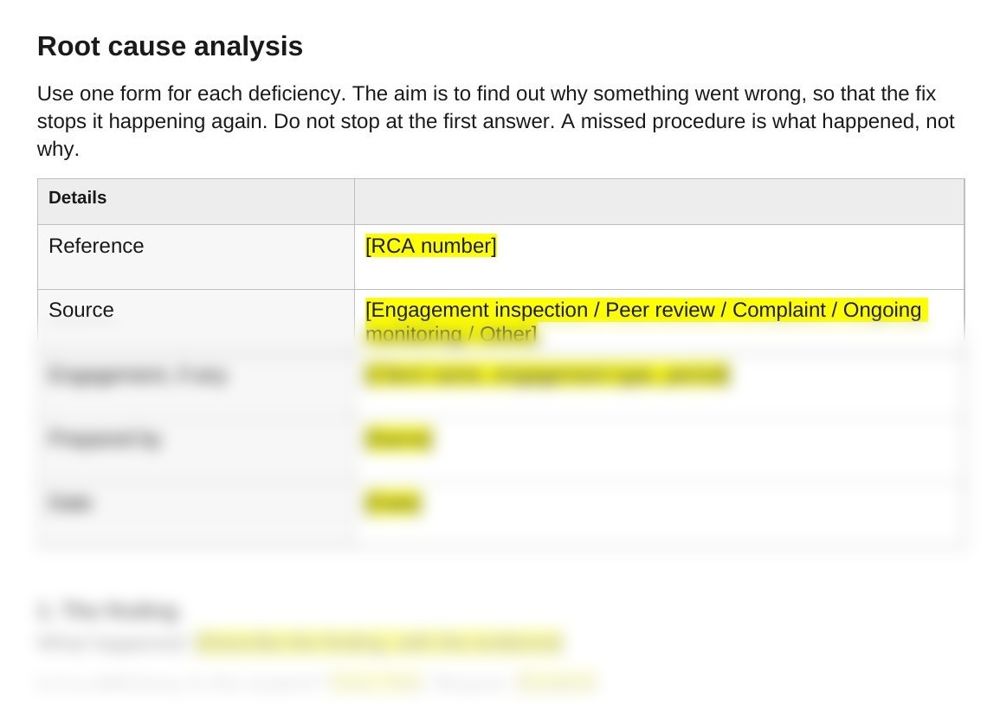
Work out why a deficiency in your firm's system of quality management happened, so the fix stops it happening again. This is the root cause analysis a CPA firm runs under the AICPA's SQMS No. 1, not a general quality tool. This root cause analysis template is one Word form for each deficiency, with a five whys table, a list of causes to check, a severity and pervasiveness rating and a remedial action plan.
US firmsGet this pack and 51 more for $79
Want every pack, for every region? Global library, 110 packs, $99
What the form looks like
When you need it
SQMS No. 1 requires a firm to evaluate the severity and pervasiveness of each identified deficiency by investigating its root causes, and to design remedial actions that respond to the results of that root cause analysis. The nature of the deficiency and its possible severity set how deep the investigation goes. Open a form when:
- An inspection of a completed engagement finds a missed procedure or a weak file
- A peer review reports a finding about your system
- A complaint or allegation points to a problem in how the firm works
- Ongoing monitoring during the year turns up a finding
- Your annual evaluation of the system is coming up and a deficiency has no root cause yet
How to use the root cause analysis template
- Open one form for each deficiency. Give it a reference and record where the finding came from and which engagement it relates to.
- Describe the finding and decide if it is a deficiency in the system. Write down the evidence and your reason. If a report may be wrong, record what the engagement partner did about it.
- Talk to the people involved. List who you interviewed and which documents you read.
- Keep asking why. A missed procedure is what happened, not why. Stop when you reach a cause the firm can fix, then tick the possible causes you checked.
- Rate it and plan the fix. Mark severity and pervasiveness, then give each remedial action an owner and a due date.
- Check later that it worked. Record the evidence, close the form or add a new action, and get it approved.
Questions
What is root cause analysis in quality management for CPA firms?
Under SQMS No. 1 it is the investigation a firm carries out into why an identified deficiency in its system of quality management happened. The firm uses the result to judge how severe and pervasive the deficiency is and to design remedial actions that respond to it.
Does SQMS No. 1 require root cause analysis?
Yes. The firm must evaluate the severity and pervasiveness of identified deficiencies by investigating their root causes and evaluating their effect, individually and in aggregate, on the system. The nature, timing and extent of the investigation take into account the nature of the deficiency and its possible severity.
What is a deficiency under SQMS No. 1?
A deficiency exists when a quality objective is not established, a quality risk is not identified or properly assessed, a response does not reduce a quality risk to an acceptably low level because it is not properly designed, implemented or operating effectively, or another part of the system is missing or not working so that a requirement of the standard is not addressed.
What is the five whys method?
You state what went wrong, ask why it happened, then ask why again of each answer until you reach a cause the firm can change. The form's table has five rows and a worked example, and you can keep going if needed.
Who checks that the remedial action worked?
The person with operational responsibility for monitoring and remediation. They evaluate whether the actions are designed to address the deficiencies and their root causes, determine that they have been implemented, and check that actions for earlier deficiencies are effective. Section 8 of the form records this.
When is the first annual evaluation of the system due?
Systems had to be designed and implemented by December 15, 2025, and the first evaluation must be performed within one year after that date, so by December 15, 2026. After that the evaluation is performed at least once a year. Open root cause analyses feed into it.
Also in the quality management kit for small CPA firms
Who it's for
US CPA firms that perform audits, reviews, compilations or other attest work and run a system of quality management under SQMS No. 1.
Last checked
Checked against SQMS No. 1 in November 2026.