What Pillar Two compliance involvesDocument in the pack
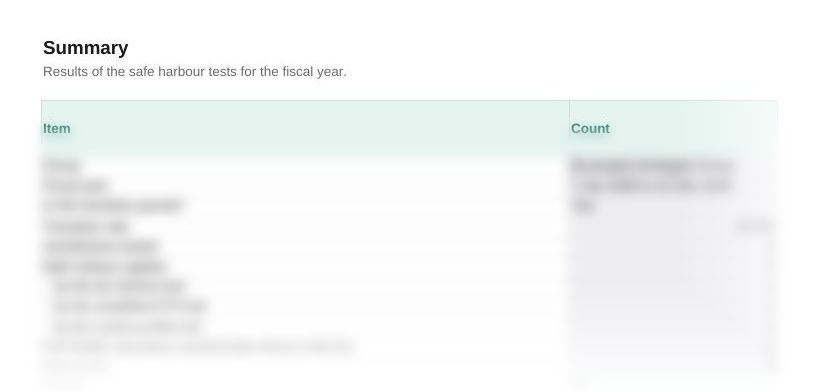
Jurisdictions taken out of the full calculationTransitional CbCR Safe Harbour (OECD, December 2022, extended January 2026)
✓Transitional CbCR safe harbour testsDe minimis, simplified ETR and routine profits tests for each jurisdiction
The right transition rate and transition periodSide-by-Side Package (OECD, January 2026)
✓Transitional CbCR safe harbour tests15%, 16% or 17% by the year the fiscal year starts, with the original or extended period
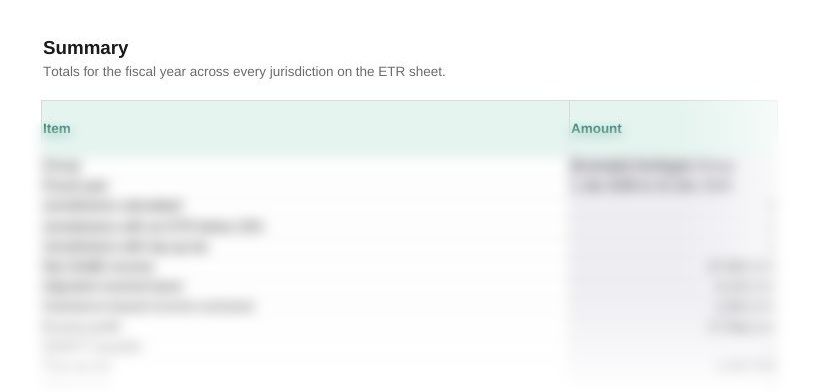
GloBE income for each jurisdictionGloBE Model Rules, Article 3.2
✓GloBE jurisdictional ETR workbookAccounting profit plus every GloBE adjustment, by category
Adjusted covered taxes and the ETRGloBE Model Rules, Articles 4.1 and 5.1
✓GloBE jurisdictional ETR workbookCurrent tax, covered tax adjustments and deferred tax, against net GloBE income
The substance-based income exclusionGloBE Model Rules, Article 5.3; Finance (No. 2) Act 2023, Schedule 16
✓GloBE jurisdictional ETR workbookPayroll and tangible asset carve-outs at the transitional rates for each year
Top-up tax at the 15% minimum rateGloBE Model Rules, Article 5.2
✓GloBE jurisdictional ETR workbookExcess profit, top-up tax percentage, additional top-up tax and QDMTT
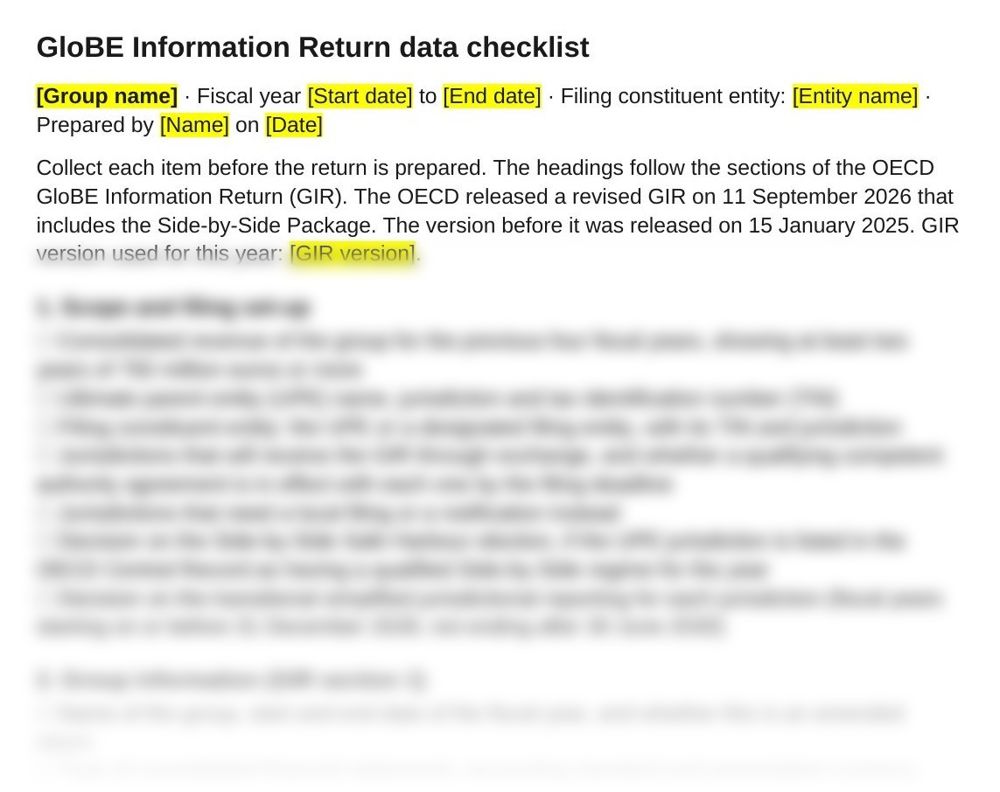
Every data point for the GloBE Information ReturnGloBE Information Return (OECD, September 2026)
✓GloBE Information Return data checklistGroup information, safe harbours, GloBE income, covered taxes, top-up tax and allocation
UK registration and return datesFinance (No. 2) Act 2023, Schedule 14
✓GloBE Information Return data checklistRegistration within 6 months, returns at 18 months then 15 months
Who it's for
Group tax and finance teams of multinational groups with revenue of 750 million euros or more, and the entity finance teams who supply the data.
Last checked
Checked against the OECD GloBE Model Rules, the December 2022 safe harbour guidance, the January 2026 Side-by-Side Package, the September 2026 GloBE Information Return and Finance (No. 2) Act 2023 in November 2026.