Finance KPI definitions guide with formulas
Define each finance KPI once, with its formula, what moves it and the traps to avoid, so every report and every person measures it the same way. These finance KPI definitions come as one Word guide covering 21 measures in five groups, with the rules that apply to all of them, how to set targets and who owns each KPI.
Finance teamsGet this pack and 51 more for $79
Want every pack, for every region? Global library, 110 packs, $99
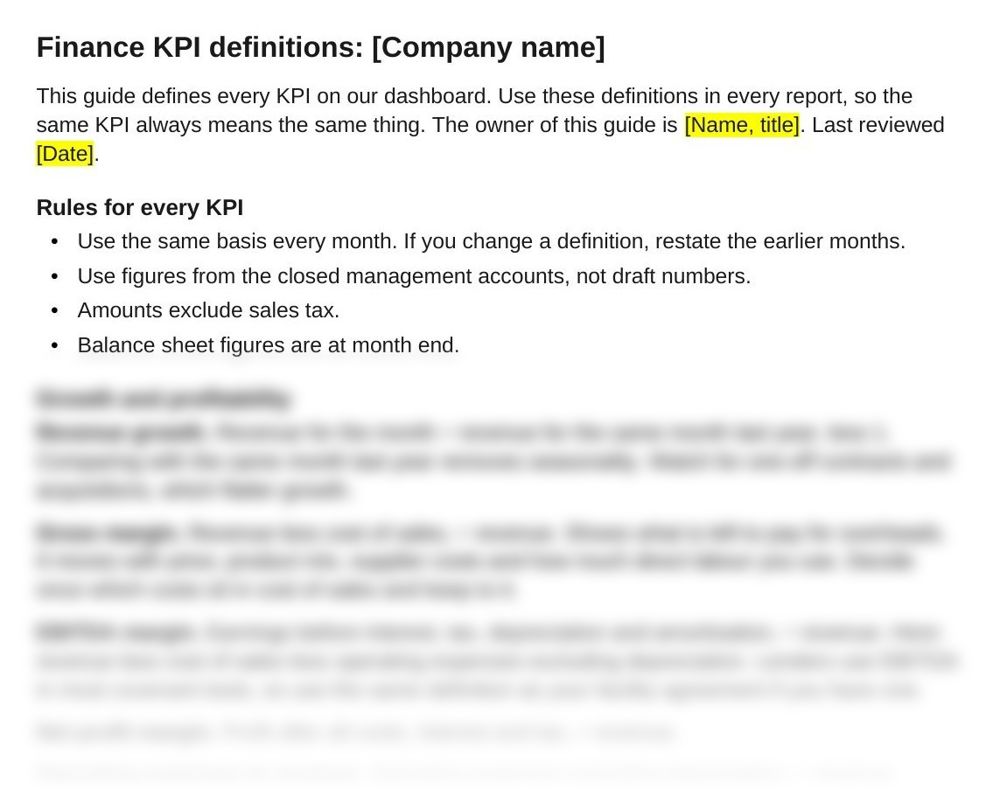
What the guide looks like
When you need it
A KPI is only useful if everyone calculates it the same way each month. Agree the definitions before the first report goes out, and restate earlier months whenever a definition changes. Use this guide when:
- Different reports show different figures for the same KPI
- A new board member or investor asks how a ratio is worked out
- Your facility agreement defines EBITDA or net debt, and the monthly pack needs to match it
- Department heads are taking on KPI owner roles for the first time
- You are starting a monthly KPI report and want to agree the measures first
How to use the finance KPI definitions
- Add your company name and the guide's owner. Record the date it was last reviewed.
- Choose your KPIs. Delete any that don't apply. Inventory days, for example, means nothing for a business without stock.
- Match lender definitions. If you have a facility agreement, use its definitions of EBITDA and net debt, and decide whether leases count as borrowings.
- Set targets and owners. Use the Setting targets table and name an owner and a review meeting for each group.
- Use the same words everywhere. Put these definitions in the notes to every report, and enter the targets in the pack's workbook.
Questions
What is a KPI in finance?
A key performance indicator: a measure the business tracks against a target to see how it is doing, such as gross margin, debtor days or cash runway. Each one needs a fixed formula, an owner and a review frequency.
What are the main finance KPIs?
Most finance teams track margins, cost ratios, working capital, liquidity, debt and cash. This guide covers 21, from revenue growth and gross margin to debtor days, the current ratio, net debt to EBITDA and days to close.
How do you calculate debtor days?
Trade receivables divided by revenue, multiplied by the number of days in the period. If receivables include sales tax and revenue does not, debtor days read higher than they really are.
What is the cash conversion cycle?
Debtor days plus inventory days, less creditor days. It is the number of days cash is tied up between paying suppliers and collecting from customers. Lower is better, and a negative figure means customers pay you before you pay suppliers.
How do you set a KPI target?
Take it from where the business has already committed: margins from the approved budget, debtor days from your payment terms plus a few days, ratios from lender covenants with some headroom, and runway from board policy.
Also in the finance KPI dashboard
Who it's for
Finance directors, CFOs and finance teams that report KPIs to management, a board or a lender.
Last checked
Checked in November 2026.