DPIA template for accountancy practices
Assess a new system or use of personal information before you start, as Article 35 of the GDPR requires when it is likely to put people at high risk. This DPIA template is one Word assessment, from the screening questions to the sign-off, with risks already listed for practice work.
EU practicesGet this pack and 109 more for $99
What the assessment looks like
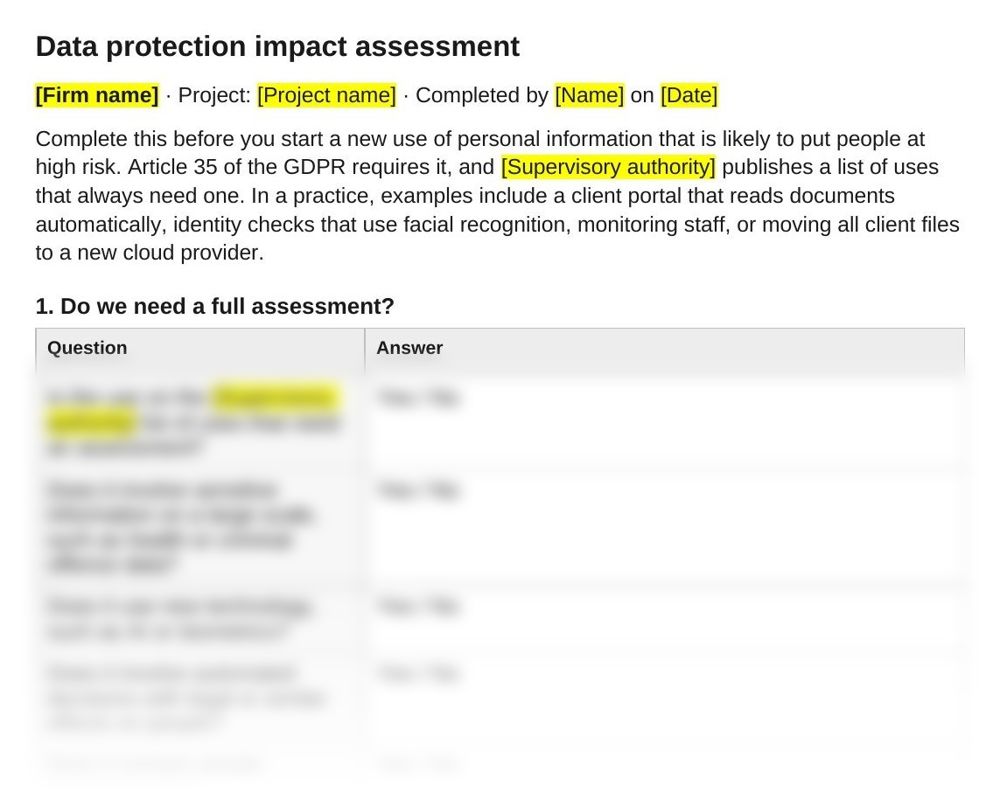
When you need it
Under Article 35 of the GDPR, you must carry out an assessment before any processing that is likely to result in a high risk to people, in particular when it uses new technology. Each supervisory authority publishes a list of processing that always needs one. In a practice, that can include:
- A client portal that reads and codes documents automatically
- Identity checks for anti-money laundering that use facial recognition
- Monitoring staff email, calls or computer use
- Moving all client files to a new cloud provider
- Bringing in an AI tool that works on client or staff information
How to use the DPIA template
- Answer the screening questions. Fill in your supervisory authority's name and check its list. If every answer is No, record the decision and keep the page on file.
- Describe the processing. Whose information, how much, where it comes from, where it goes and which providers are involved.
- Test necessity. Record the lawful basis and whether you could do the same with less information.
- Rate each risk. Mark likelihood and severity, and write down how you reduce it. Add any risk the list doesn't cover.
- Get advice and sign off. Ask your data protection officer if you have one, then record the remaining risk, the approval and a review date.
- Consult your authority if high risk remains. Do this before you start the processing.
Questions
When is a DPIA required under the GDPR?
Before processing that is likely to result in a high risk to people. Article 35 names three cases: automated evaluation with legal or similar effects, large-scale use of special category or criminal offence data, and large-scale systematic monitoring of a public area. Your supervisory authority's list adds more.
What must a DPIA include?
At least a systematic description of the processing and its purposes, an assessment of whether it is necessary and proportionate, an assessment of the risks to people, and the measures you will take to address them.
How do you decide if processing is high risk?
The DPIA guidelines endorsed by the EDPB list nine criteria, including scoring, automated decisions, systematic monitoring, sensitive data, large scale, vulnerable people such as employees, and new technology. Processing that meets two of them will in most cases need a DPIA.
What happens if high risk remains after the DPIA?
You must consult your supervisory authority before you start. If it thinks the processing would break the GDPR, it gives written advice within up to eight weeks, which it can extend by six weeks for complex cases.
Do you have to publish a DPIA?
No. The GDPR doesn't require it. The EDPB-endorsed guidelines suggest publishing a summary or conclusion can build trust.
How often should a DPIA be reviewed?
Article 35 asks for a review at least when the risk of the processing changes. The guidelines treat it as good practice to review a DPIA regularly. This assessment has a review date in the outcome table.
Also in the EU GDPR pack for practices
Who it's for
EU accountancy practices bringing in a new system or use of personal information that could put clients or staff at high risk.
Last checked
Checked against Articles 35 and 36 of the GDPR and the EDPB-endorsed DPIA guidelines in November 2026.