CPA letter for self employment template for mortgage lenders
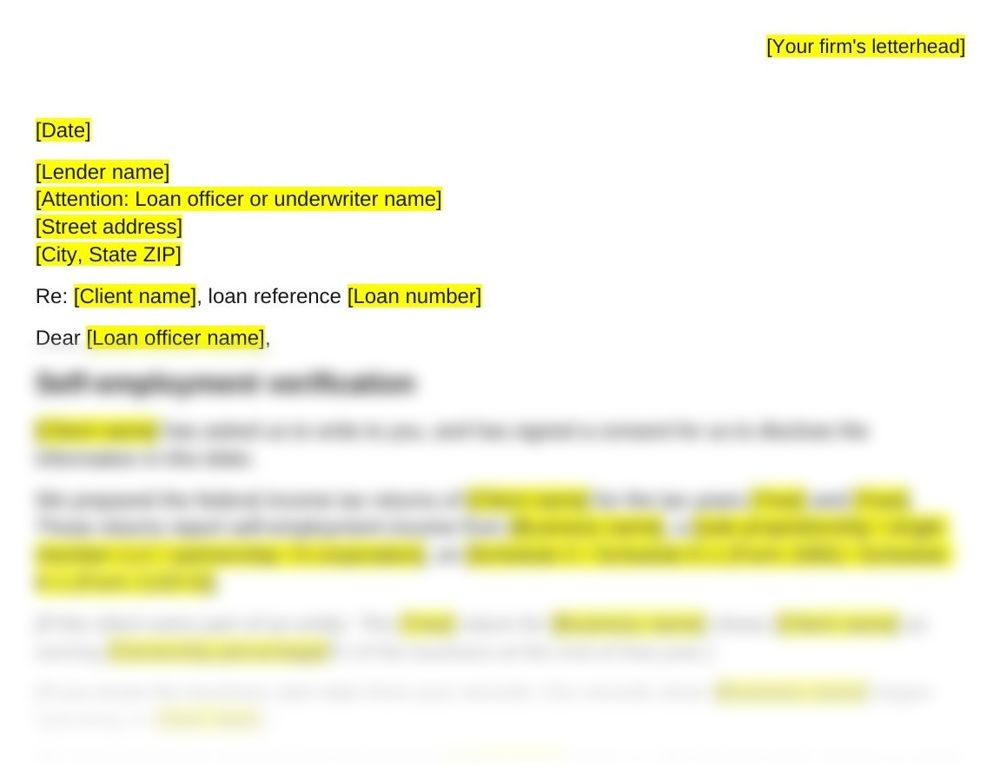
Confirm to a lender that a client is self-employed, using only the facts on the returns you prepared, and say plainly that you give no view on the business's finances or the client's ability to repay. This CPA letter for self employment template is one Word letter on a single page.
US firmsGet this pack and 51 more for $79
Want every pack, for every region? Global library, 110 packs, $99
What the letter looks like
When to send the CPA letter for self employment template
Under Fannie Mae's Selling Guide, a borrower with a 25% or greater ownership interest in a business counts as self-employed, and the lender has to document that the business exists. Lenders often turn to the client's CPA for that confirmation. Send this letter when:
- A lender or loan officer asks you to confirm that a client is self-employed
- A client applying for a mortgage reports business income on Schedule C or a Schedule K-1
- The lender wants the client's share of a partnership or S corporation confirmed
- The request asks for more than you can confirm, so you send the facts here and decline the rest with the pack's decline letter
How to use the self-employment letter
- Get the signed consent first. Have the client sign the pack's Section 7216 consent, naming the lender and what you will disclose, before the letter goes out.
- Ask what the lender needs. Find out exactly what it wants confirmed. Anything about repayment, future income or business cash goes in the decline letter, not here.
- Fill in the facts from the returns. Name the tax years, the business, the entity type and the schedule. Keep the ownership and start date lines only if your records show them.
- Leave the no-assurance paragraph as it is. It says the returns came from the client's information and that you give no view on the business or repayment.
- Sign, send and log it. A CPA signs. Record the date sent and the consent in the pack's letter log.
Questions
Can a CPA confirm that a client is self-employed?
Yes, as a statement of fact from the returns you prepared: the business, the type of entity and the schedule where the income is reported. The letter gives no audit opinion and no assurance on those figures.
Do I need the client's consent before writing to a lender?
Yes. Under Section 7216 rules, a tax return preparer needs the taxpayer's written consent before disclosing tax return information. The consent names you and the client, the purpose, the recipient and the information, and is signed and dated by the client. If it states no end date, it lasts one year from signing. You can't make your services depend on the client signing it.
Can the letter say the business can afford the loan or the withdrawal?
No. AICPA attestation standards say a practitioner should not give any form of assurance that an entity is solvent or can pay its debts as they mature. Under Fannie Mae's guide, when business funds are used, the lender itself analyses the business cash flow. Use the pack's letter declining an assurance for those questions.
What ownership counts as self-employed for a mortgage?
Fannie Mae treats a borrower with a 25% or greater ownership interest in a business as self-employed. The optional ownership line in the letter states the percentage shown on the return you prepared.
Which documents can a lender use to confirm the business exists?
Fannie Mae lists examples such as an IRS letter confirming the employer identification number, a business permit from the state or city, articles of incorporation and partnership agreements. A CPA letter is one more way to confirm the facts from the returns.
Also in the CPA verification and comfort letters (US)
Who it's for
CPA firms and tax practices in the US that prepare returns for self-employed clients and get verification requests from their lenders.
Last checked
Checked against Treas. Reg. 301.7216-3, the AICPA attestation interpretation on solvency and Fannie Mae's guide on self-employed borrowers in November 2026.